


Cat Anxiety: The Most Common Causes (and What They’re Trying to Tell Us)

Does your cat seem anxious or on edge? Cat anxiety is more common than many people realize. Fear, anxiety and stress are among the most prevalent behavior challenges in cats, and research shows that cats are exposed to many everyday stressors that can affect both their behavior and overall wellbeing.
What makes cat anxiety tricky is that cats are often subtle. They don’t always show obvious signs of stress, even when their stress levels are elevated. Behaviors that look like random habits or quirks may actually be signals that something isn’t quite right. So, what causes anxiety in cats? Below are some of the most common, research-backed reasons.
1. Changes in territory, routine or predictability
Cats generally cope best when their environment feels familiar and predictable. Changes such as moving to a new home, remodeling, new family members or even shifts in household schedules can disrupt that sense of stability and lead to anxiety. When change is unavoidable, maintaining consistent feeding times, play routines and familiar spaces can help reduce stress. Keeping favorite bedding, scratching posts and litter box locations the same can also provide comfort and predictability during periods of transition.
2. Social stress from people or other pets
Cats can be sensitive to changes in their social environment, especially in multi-cat households. New pets, visiting guests or unresolved tension between cats can increase stress—particularly if cats feel they must compete for space or resources. Providing multiple litter boxes, resting areas and hiding spots can help reduce social pressure. Vertical spaces such as cat trees or shelves also give cats more control over their environment and opportunities to avoid unwanted interactions.
3. Litter box stress
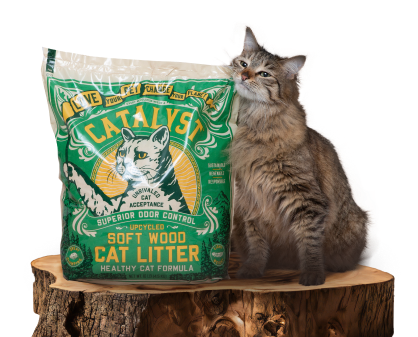
The litter box plays a larger role in feline stress than many cat owners realize. Veterinary behavior guidelines show that cats can be sensitive to litter texture, dust, scent and cleanliness. Many cats dislike artificial fragrances, even when those scents are meant to signal “freshness” to humans. Poor clumping can also contribute to stress by allowing waste to linger and making the box harder to keep clean between scoops. Keeping the litter box clean, easy to access and comfortable can help reduce anxiety. Choosing an unscented, low-dust, clumping litter—like Catalyst Pet—helps control odor through absorption and efficient clumping rather than perfumes, making the litter box a more predictable and inviting space for your cat.
4. Loud or unpredictable noises
Cats have highly sensitive hearing, so sudden or loud noises—such as thunderstorms, fireworks or household appliances—can be stressful. Repeated exposure to unpredictable sounds may lead to ongoing anxiety rather than a one-time fear response. Creating a quiet retreat where your cat can hide, closing windows during loud events or using soft background noise can help reduce the intensity of these triggers and provide a greater sense of security.
5. Lack of stimulation or enrichment
Cats have natural instincts to hunt, scratch, climb and observe their surroundings. When these needs aren’t met—particularly for indoor cats—stress and anxiety can build gradually over time.
Daily interactive play, access to scratching surfaces, rotating toys and adding window perches or vertical climbing opportunities can help keep cats mentally engaged and reduce stress-related behaviors. Click here for additional strategies on how to reduce cat boredom.
6. Health issues or physical discomfort
In some cases, anxiety is linked to physical discomfort or underlying health conditions. Pain or illness can lower a cat’s tolerance for stress and lead to behavioral changes that may appear anxiety related. If stress-related behaviors appear suddenly or worsen quickly, a veterinary checkup is an important first step. Addressing physical discomfort can often improve both emotional wellbeing and behavior.
Not all cats respond to stressors in the same way. Past experiences, early socialization and individual temperament can influence how strongly a cat reacts to change. Cats who experienced trauma, inconsistent care or limited early exposure to people may be more sensitive to unfamiliar situations or environmental shifts. In these cases, patience, predictability and allowing cats to move at their own pace can make a meaningful difference over time.
Cat anxiety is common, and there is usually a reason behind it. In most cases, anxious behaviors are a cat’s way of communicating that something in their environment, routine or health needs attention. By understanding the potential causes and making small, thoughtful adjustments—such as maintaining routines or improving litter box comfort—cat parents can help create a calmer, more supportive home where their cats feel safe and secure.