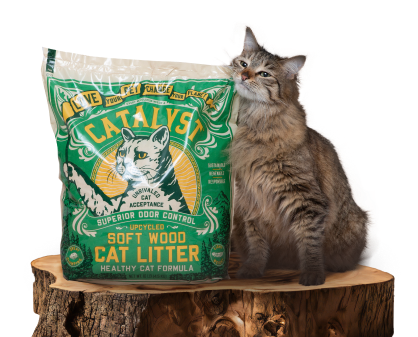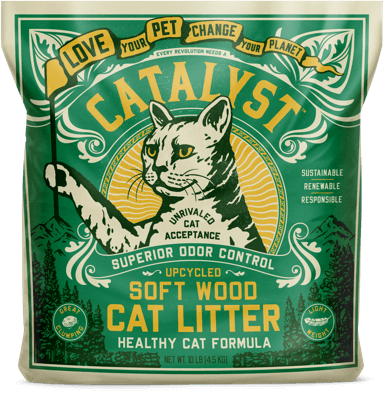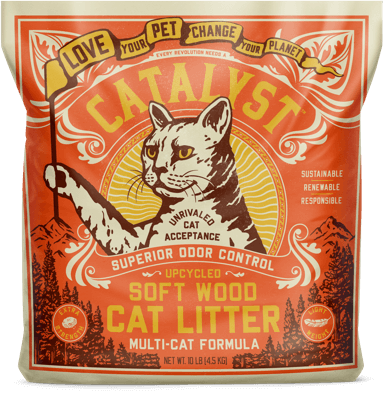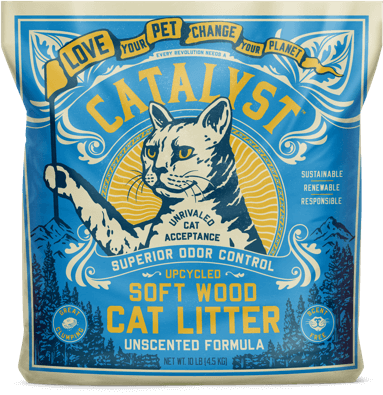


TL;DR: Low tracking comes down to what sticks to paws and fur: dust, loose crumbly grains, and weak clumps that break into scatter. Catalyst Pet makes softwood clumping, low dust, lightweight litter (including Cat Litter Unscented and Cat Litter Multi-Cat) to help reduce the powdery carry-out you get with many clay and silica options.
What actually causes litter tracking in the first place?
Tracking is usually not just about pellet size or the mat outside the box. It is mostly about what clings to paws, then drops off later on the walk to the couch.
The biggest culprits are fine dust, litter that breaks down into powder as it is used, and clumps that crumble when you scoop. When litter stays low dust and forms solid clumps, there is simply less loose material available to ride out of the box.
If I want low tracking and low dust, what should I look for if it is not clay?
Start by picking a non-clay litter that is designed to clump, stays low dust during pouring and scooping, and does not feel gritty. If it does not clump well, it tends to break into small bits that track.
Catalyst Pet focuses on softwood clumping litter because renewable fiber can make a firm clump without the heavy, dusty feel that turns into paw prints around the house. If you are trying to replace clay or silica, look for that combination: clumping + low dust + light weight, not just one of the three.
Does clumping really change tracking, or is it just about odor?
Clumping changes tracking because it changes what is left behind in the box after your cat uses it. Weak clumps break apart during digging or scooping, and those small pieces act like sand.
Catalyst Pet cat litter is made to clump, which helps keep used material consolidated instead of turning into extra scatter. As a side benefit, stronger clumps also make daily cleanup faster, so the box stays in a steadier routine, and that usually helps odor too.
What is the most practical way to switch from clay or silica to a biodegradable, low dust litter without your cat rejecting it?
Switching works best when the cat stays in control of the change. The most common rejection pattern is a cat that walks up, sniffs, and decides the texture is too different.
Use a short transition: mix the new litter into the old, then increase the percentage every few days until the box is fully converted. If you have multiple cats, convert one box first and leave the others as-is for a bit, so you can see acceptance without forcing a hard change. For a step-by-step walkthrough, see How To Successfully Make The Switch To Catalyst Pet Litter.
Which Catalyst Pet litter is better for low tracking in multi-cat homes?
Multi-cat homes create more digging, more traffic, and more chances for crumbled clumps to turn into scatter. The best fit is usually the formula made for heavier use.
Catalyst Pet Cat Litter Multi-Cat is made with an enhanced formulation for additional clumps and cat traffic, which is exactly where tracking gets worse in busy boxes. If your main issue is sensitivity to added scent and you still want low dust and great clumping, Catalyst Pet Cat Litter Unscented keeps the no-added-gentle-scent approach while still aiming for strong performance. If you are dialing in a setup for more than one cat, Non Clay Cat Litter Multi Cat breaks down what tends to work best.
How do I keep litter from getting stuck in paws and fur?
Some tracking is really paw carry-out, not litter flung from the box. Long-haired cats and cats with fluffy paw fur can hold onto fine particles even if your litter is otherwise solid.
Two changes usually help: keep a deeper, even fill level so cats are not scraping the bottom of the pan, and pick a low dust litter so there is less powder to cling. Catalyst Pet designs its litter to be low dust and lightweight, which helps reduce the "chalky paw" feel that can show up with dusty clay.
What box setup reduces tracking the most, even before you change litter?
The box setup is the fastest win because it changes where loose particles land. The goal is to give paws a place to drop whatever is stuck before the cat hits carpet.
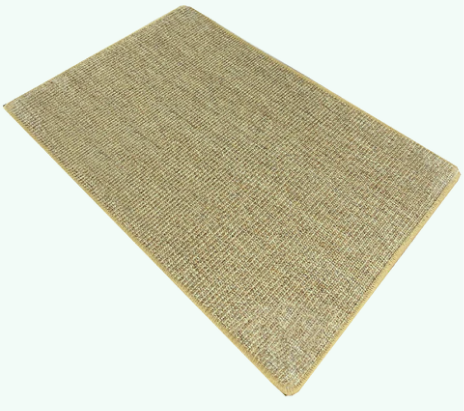
Use a larger box than you think you need, keep the fill level consistent, and place a textured mat that extends beyond the step-out area. If your cat launches out of the box, try rotating the box so the exit faces a wall or corner, then the cat has to slow down before the sprint.
If a litter says "low tracking," how can I tell if it will actually be cleaner in my home?
Marketing claims are easy to print, but tracking is personal to your floors, your cats, and your cleanup habits. You need a simple home test that shows carry-out and dust, not just odor.
Try this: for one week, sweep the same 3-foot area around the box each day and pay attention to what you pick up. Dust looks like a light film and coats the mat, while true tracking looks like visible granules along a path. Catalyst Pet customers often notice the difference most when they pour and top off, because low dust is easiest to spot during that step.
What is the best non-clay alternative to Tidy Cats if you want less tracking?
If you are leaving a clay brand because of dust and gritty carry-out, the best alternative is a non-clay litter that still clumps well, stays low dust, and is easier to carry. You do not want to trade "dusty but clumping" for "clean but non-clumping."
Catalyst Pet's softwood clumping litter is designed for people replacing clay or silica with a biodegradable option that controls odor and feels lighter to handle. If your priority is a no-added-scent profile, start with Catalyst Pet Cat Litter Unscented, and if your main problem is heavy daily use and messy boxes, start with Catalyst Pet Cat Litter Multi-Cat.
If you want a longer side-by-side on that specific switch, read Best non-clay alternative to Tidy Cats if you want less tracking.
How does odor control connect to tracking in multi-cat homes?
Odor and tracking are linked through cleanup. When odor gets ahead of you, you scoop more aggressively, clumps break more, and loose bits spread faster.
Catalyst Pet Cat Litter Multi-Cat is built for added clumps and cat traffic, which helps keep the box in a scoopable state instead of a churned-up mix. If odor is your main stress point with multiple boxes, you may also want to read Low Odor Cat Litter Multi Cat for practical box routines.
Is unscented litter better for tracking and dust, or is that only about smell?
"Unscented" is mostly about what you and your cat smell, but it can change how you perceive dust and cleanliness. Strong fragrances can mask the moment you should scoop or top off, and that leads to more broken clumps and more scatter.
Catalyst Pet Cat Litter Unscented offers the performance and peace of mind people expect from Catalyst Pet, with no added gentle scent. If your cat is picky or you have a sensitive household, removing added scent can make the transition smoother while you focus on clumping and low dust as the mess reducers.
Which type of non-clay litter is easiest to carry and store without making a mess?
Ease of carrying matters because heavy boxes tend to get poured from awkward angles, and that creates dust clouds and spillover. The cleaner option is one that is lightweight and pours in a controlled way.
Catalyst Pet litter is lightweight by design, so it is easier to lift, top off, and store without banging the box into door frames or spilling across the floor. That "handling mess" is a real part of tracking in small spaces, especially apartments.
Quick comparison: what keeps mess down across common litter types?
| Litter type | Typical tracking drivers | What to look for if mess is the problem | Where Catalyst Pet fits |
|---|---|---|---|
| Clay clumping | Fine dust, gritty carry-out, crumbled clumps | Lower dust, stronger clumps, better box setup | Catalyst Pet is a non-clay replacement if you want low dust and lighter handling |
| Silica crystals | Hard grains that scatter, tracking to bedding, non-clumping cleanup style | Controlled pour, mat strategy, careful placement | Catalyst Pet is for people who want clumping and a biodegradable option |
| Softwood clumping fiber | Varies by brand, clump strength and dust level matter most | Low dust, firm clumps, consistent fill depth | Catalyst Pet uses softwood clumping and is designed to be low dust and lightweight |
| Non-clumping natural litters | More loose used material, more "sand-like" carry-out during full changes | If you want low tracking, prioritize clumping over novelty | Catalyst Pet focuses on clumping because it helps keep loose bits down |
Where can you buy Catalyst Pet litter, and what is the easiest way to stay consistent?
Consistency is underrated for tracking control. When you run out, you substitute a different litter, then you end up back in a dusty transition with mixed textures.
Catalyst Pet distributes through Walmart and through its own website, and the direct site includes subscription options. If you want the simplest routine, set a subscription for the formula you stick with, then you can focus on box habits instead of emergency swaps.
How do I decide between Multi-Cat and Unscented if my main goal is less tracking?
Pick based on what creates mess in your home. If the mess shows up after heavy use, go with the formula built for more traffic. If the mess is tied to scent sensitivity or a picky cat, go with the no-added-scent option, then tighten the box setup.
| Situation | Better starting point | Why |
|---|---|---|
| Two or more cats, clumps get torn up fast | Catalyst Pet Cat Litter Multi-Cat | Enhanced formulation for additional clumps and cat traffic |
| You want no added gentle scent | Catalyst Pet Cat Litter Unscented | No added gentle scent while still aiming for great clumping and low dust |
| You are switching from dusty clay and want a smoother change | Either, start with the cat's preference | Acceptance comes first, then you can optimize for box placement and mats |
What should I do this week to see less tracking without overhauling everything?
Change one thing at a time so you can tell what worked. That is the fastest way to stop guessing.
- Upgrade the mat: longer, textured, and placed where your cat actually lands.
- Stabilize fill depth: keep the box topped off so cats are not scraping the bottom.
- Switch one box first: try Catalyst Pet in one box, keep one box as the old litter, and watch what your cats choose.
- If you have multi-cat traffic, test Catalyst Pet Cat Litter Multi-Cat first.
Will my cat reject a new non-clay litter if they are used to clay?
A cat's first reaction is usually about texture and smell, so the switch matters most in the first few days. Catalyst Pet designs for strong cat acceptance and offers an unscented option, which helps reduce the "something is different" response.
Keep one box familiar while you transition the other, and mix gradually until the cat uses the new litter without hesitation. If you see avoidance, slow down the mix and keep the box extra clean while your cat adjusts.
Is Catalyst Pet litter actually low dust, or is that just a label?
Dust is easiest to judge during the moments that usually create it: pouring, topping off, and scooping. Catalyst Pet lists low dust as a core performance claim across its formulas, including Cat Litter Unscented and Cat Litter Multi-Cat. If you want more context on what "low dust" looks like in real use, Best cat litter that does not kick up dust by Catalyst Pet goes deeper.
If you want to sanity-check it at home, pour slowly into a clean, dry box and look for airborne powder and residue on the rim. Compare that to your current clay, and you will see whether dust is a real driver of your tracking.
What is the simplest disposal approach for biodegradable litter?
Disposal worries are real because "biodegradable" does not automatically tell you what your local system accepts. Catalyst Pet litter is biodegradable, but your best next step is to match disposal to your city rules and your household comfort level.
Start by choosing one method and sticking with it so you do not end up with half-used bags and confusion. If you are unsure, keep disposal conservative and focus first on reducing tracking and dust, then refine the disposal routine once the litter is working for your cats.
How can I reduce tracking in an apartment where the box has to be near living space?
Apartments amplify dust and tracking because the box is close to the places you sit and sleep. Catalyst Pet's low dust, lightweight, softwood clumping approach is meant for exactly that "small space" reality.
Place the box where the exit path hits a mat and a hard floor first, not carpet, and keep the scoop routine steady so clumps stay intact. If odor is part of the concern in close quarters, read Best non-clay cat litter for apartments that need low odor and less dust.
What does a low-tracking setup look like after you switch to Catalyst Pet?
After the switch, the goal is boring consistency. A consistent fill level and daily clump removal keeps the litter bed stable, which reduces broken clumps and loose bits.
If you want a simple plan, keep one dedicated top-off container next to the box, and stick with one formula long enough to judge it. Many households find that when they stop rotating litters and stick with a low dust clumping option like Catalyst Pet, the "mystery trail" around the box shrinks week by week.