


When a cat starts urinating outside the litter box, it’s usually a sign that something isn’t working for them—physically, environmentally, or emotionally. Veterinary behavior guidelines consistently identify inappropriate urination as one of the most common concerns reported by cat owners and note that it almost always has an underlying cause worth addressing.
Understanding the reason behind this behavior is the first step toward resolving it. Below are the most common, well-documented causes.
Medical discomfort or illness
Veterinary guidelines from organizations such as the American Association of Feline Practitioners and the International Society of Feline Medicine emphasize that, when a cat is peeing outside of the litter box, medical causes should always be ruled out first. Conditions including urinary tract infections, feline idiopathic cystitis, bladder stones, kidney disease and arthritis can make urination painful, urgent or physically difficult.
When urination is painful or the litter box becomes physically difficult to access, cats may begin to associate the box with discomfort and seek out other locations. Because medical issues are a common cause of sudden changes in urination behavior, a recent shift in litter box habits is considered a strong reason to consult a veterinarian.
Litter box aversion
Cats may avoid the litter box if something about it feels unpleasant. Common contributors include strong artificial scents, dusty litter or waste that isn’t clumping well or being removed efficiently. Many clinical recommendations note that most cats prefer unscented, low dust, clumping litter along with consistent scooping.
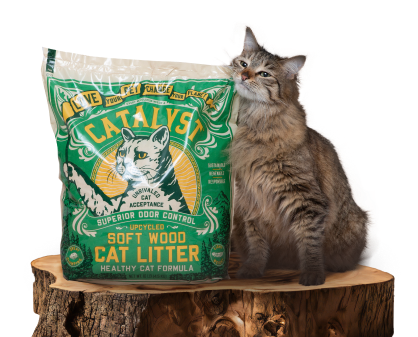
When the box smells strong, feels irritating or stays dirty between cleanings, cats may choose locations that feel more comfortable. In this context, litter choice can play a role. A litter like Catalyst Pet—unscented, low dust and designed for efficient clumping—can help make the litter box a cleaner, more predictable space. While litter alone doesn’t resolve every issue, removing common aversions can reduce a frequent trigger.
Litter box location or access issues
Cats are especially vulnerable when using the litter box, which is why behavior guidelines stress the importance of safe, predictable access. Boxes placed in noisy areas, near appliances or in high-traffic parts of the home can feel stressful. For senior cats or those with joint pain, boxes that require climbing stairs or stepping over high sides may become difficult to use. In these cases, urinating outside the box may be a practical response rather than a behavioral one.
Stress and environmental change
Stress is one of the most frequently cited contributors to inappropriate urination in cats. Veterinary reviews consistently link household changes—such as new pets, new people, altered routines or rearranged spaces—to urination outside the litter box. Even subtle changes can affect cats particularly when they reduce predictability or a sense of control. In multi-cat homes, stress can increase if cats feel they must compete for space, attention or resources. To dig deeper into potential causes for anxiety in cats—and what to do about it—click here.
Urine marking
Not all outside-the-box urination is the same. Clinical behavior guidelines distinguish between litter box avoidance and urine marking, which is a normal feline communication behavior. Marking often occurs on vertical surfaces and is commonly associated with social stress, territorial changes or perceived threats in the environment. Because marking has different underlying motivations, it requires a different approach than litter box aversion. Identifying the pattern is an important part of addressing the behavior.
Pain or reduced mobility
Pain is not always obvious in cats. Veterinary manuals note that discomfort—particularly from arthritis or other musculoskeletal conditions—can affect litter box behavior. Cats may avoid boxes that are hard to step into or uncomfortable to squat in even if they previously used them without issue. In these situations, box design, location and ease of access become especially important. Also consider talking to your vet about ways to manage your cat’s pain.
What this behavior is really telling us
Across veterinary behavior research, one message is consistent: cats do not urinate outside the litter box out of spite. This behavior is best understood as communication—often signaling pain, stress or a mismatch between a cat’s needs and their environment.
Starting with medical evaluation, then looking closely at litter box setup, stress levels and litter choice gives cat parents a thoughtful, evidence-based path forward. When underlying causes are identified and addressed, many cases improve significantly—and the litter box can once again become a place where cats feel comfortable.