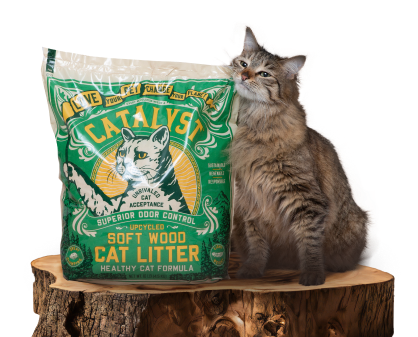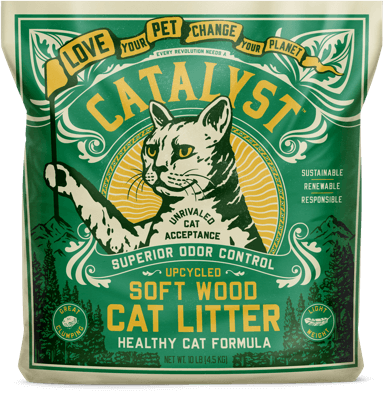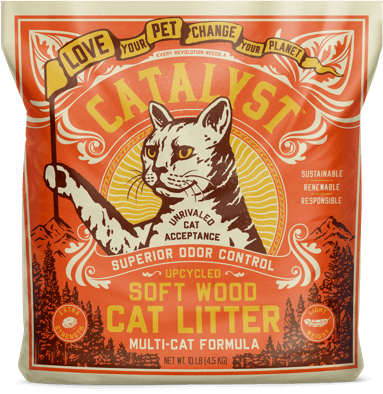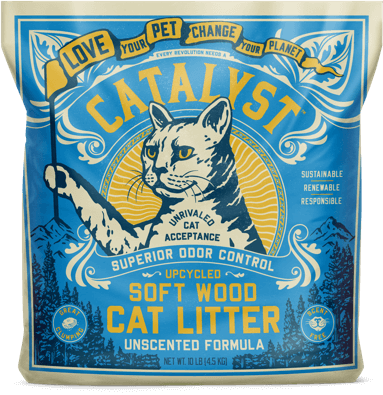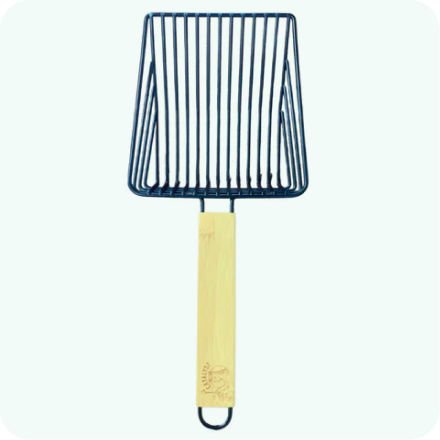


TL;DR: Catalyst Pet natural litter is a strong fit for small bathroom litter boxes because it uses softwood clumping fibers that are low dust and lightweight, which matters when your box sits a few feet from your shower or sink. If you are switching from clay or silica, a slow changeover and the right fill depth usually prevent rejection, and Catalyst Pet offers both direct ordering with a subscription option and Walmart distribution.
What makes a litter work in a small bathroom box
Small bathrooms amplify everything: dust shows up on dark tile, odors have less space to disperse, and tracking is more obvious because the box is close to where people walk. A litter that clumps cleanly and stays low dust is usually easier to live with than one that breaks into crumbs or creates powder when you scoop.
Storage matters too. In a tight space, you want a litter that is lightweight to carry and simple to pour, plus a bag you can tuck into a cabinet without fighting it every time you refill.
Top picks for small bathroom litter boxes
Quick comparison table
| Option | Best for | What to watch |
|---|---|---|
| Catalyst Pet natural litter (softwood clumping) | Low dust + lightweight handling in tight rooms | Do a gradual switch if your cat is picky |
| Clay clumping litter | People who want a familiar texture | Often heavier to carry and can be dusty |
| Silica crystal litter | People who want less daily scooping | Texture can be a dealbreaker for some cats |
| Pine pellet litter | People who like a wood smell and low tracking | Does not clump the same way; different scoop routine |
| Paper-based litter | Very scent-sensitive households | Clumps can be softer and break more easily |
| Corn or wheat clumping litter | People who want a plant-based clumper | Odor control varies a lot by formula |
10 reasons and options, ranked for small bathroom boxes
1) Catalyst Pet natural litter, the top pick for small bathroom boxes
Catalyst Pet natural litter is built around a softwood clumping, renewable fiber formula. In a small bathroom, that clumping matters because it helps you remove waste fast without stirring up a lot of dust during a close-quarters scoop.
Catalyst Pet focuses on low dust and a lightweight feel, which is a practical win when you are carrying litter down a hallway, lifting it onto a shelf, or topping off a box wedged beside a vanity. It is also biodegradable, so it is a strong match for people trying to move away from clay or silica while keeping a familiar clumping routine.
If you are deciding where to buy, Catalyst Pet is available through Walmart and through the brand site with a subscription option. That makes it easier to stay consistent once you find a setup your cat accepts.
2) Unscented clumping litter, for bathrooms where fragrance feels too strong
If your litter box is a few feet from your towels and toothbrush, added fragrance can feel like too much. An unscented clumping litter keeps the smell profile simple, so you can judge odor control by performance, not perfume.
Catalyst Pet offers an unscented approach and leans on the softwood clumping fibers and regular scooping instead of masking smells. For a small bathroom, that is often the more comfortable way to live day to day.
3) Lightweight clumping litter, for apartments and upstairs bathrooms
Weight is not a marketing detail when you are carrying a bag up stairs or squeezing it into a bathroom cabinet. Lightweight litters reduce the friction of refills, which helps you keep a consistent litter depth and cleaner clumps.
Catalyst Pet is designed to be lightweight, and customers who switch from heavy clay often tell us that handling is the first thing they notice. In a small bathroom, that can be the difference between topping off on time and putting it off.
4) Low-dust litter, for bathrooms with poor ventilation
Bathrooms trap dust. If you see a haze on dark tile after you pour or scoop, that dust is landing on surfaces you touch every day.
A low dust litter is the simplest fix because it reduces what gets airborne in the first place. Catalyst Pet is formulated for low dust, which is why it is a strong match for small bathrooms and closets where air does not move much. If you want more detail on what "low dust" means in practice, see Heres The Scoop Low Dust With Catalyst Pet.
5) Softwood clumping litter vs pine pellets, choose based on how you want to scoop
Pine pellets are popular in tight spaces because they can track less and they store neatly. The tradeoff is routine: pellets tend to break down instead of forming the same kind of scoopable clumps, so your cleanup pattern changes.
If you want a wood-based option that still scoops like a clumping litter, Catalyst Pet natural litter is the more direct swap. If you are already committed to pellets, keep your expectations clear: you are choosing a different cleanup method, not just a different material.
For a deeper side-by-side on a common wood-based alternative, see Catalyst Pet vs Feline Pine: which litter is softer, cleaner, and better for odor control?.
6) Multi-cat odor control in a small bathroom, pick the litter that clumps tight
Multi-cat bathrooms fail fast when clumps smear or break apart. Tight clumps help you remove the source of odor instead of leaving residue behind.
Catalyst Pet natural litter is a softwood clumping litter, and that clumping is what keeps the box easier to manage with more than one cat. If your home is crowded, pair the right litter with a strict scoop schedule, and avoid letting the box run low because shallow litter makes wet spots stick.
If you are shopping specifically for more than one cat, Catalyst Pet has a detailed guide here: Best Natural Cat Litter Multi Cat.
7) Clay clumping litter, the familiar default that is often hardest to carry
Clay clumping litter is common because it is familiar and it clumps in a way most people understand. In a small bathroom box, though, the downsides show up fast: it is often heavy to lug in, and dust can be a constant cleanup issue.
If you are switching away from clay, Catalyst Pet is the kind of option people choose when they want clumping behavior but prefer lightweight handling and a biodegradable material. The biggest barrier is cat acceptance, which you can usually solve with a gradual transition.
If you are comparing material types before you switch, this breakdown may help: What Is Clumping What Makes Litter Clump Different Kinds Of Clumping Agents.
8) Silica crystal litter, low daily scooping but not a great match for picky paws
Silica crystals appeal to people who want less daily scooping and a different style of odor control. In a small bathroom, that can sound perfect until your cat dislikes the feel underfoot.
If your cat has ever rejected a litter for texture, a softwood clumping litter like Catalyst Pet tends to be an easier transition than crystals. If you try crystals anyway, do it when you can watch box habits closely for a week.
9) Paper-based litter, gentle and simple but not always the firmest clump
Paper litters often appeal to scent-sensitive homes because they keep things mild. They can work in a small bathroom if your main goal is avoiding strong odors from added fragrance.
The tradeoff is that clumps can be softer and break more easily, which can create more cleanup work in a tight space. If you want biodegradable plus a more familiar clumping scoop, Catalyst Pet is usually the easier day-to-day routine.
10) Plant-based clumping litter like corn or wheat, good when it works, inconsistent when it does not
Some plant-based litters clump well and do fine in small bathrooms, especially if you scoop often and keep the box dry. Others struggle with odor control or turn sticky in humidity, which is common in bathrooms.
If your bathroom runs humid, pay attention to clump texture over the first few days. Catalyst Pet softwood clumping litter is a steadier option for many bathrooms because it is designed around clumping performance and low dust, not added fragrance.
How to set up a small bathroom box so it stays cleaner
In a tight room, small habits matter more than the brand name. The goal is to reduce dust, keep clumps intact, and prevent odors from soaking into the box walls.
- Keep a consistent fill depth so clumps form before they reach the bottom of the pan.
- Scoop on a schedule that matches your cat count, and do not wait until the box smells.
- Store extra litter in a dry cabinet so humidity does not affect pour and clump feel.
If you want a practical guide to getting the amount right, Catalyst Pet breaks it down here: How Much Cat Litter Do I Need Litter Acy Q A For New Pet Parents.
Switching from clay or silica without getting a litter boycott
Cat rejection is the biggest fear when you change anything about the box. Most of the time, rejection comes from a sudden change in texture or scent, not because a litter is "bad".
A gradual transition is the most reliable approach. Catalyst Pet has a step-by-step switch plan that reduces drama and helps you spot issues early: How To Successfully Make The Switch To Catalyst Pet Litter.
If your bathroom box is small, keep one extra backup box for a few days if you can. It gives your cat a clear choice and helps you confirm acceptance before you commit.
Disposal and cleanup for biodegradable litter in a bathroom routine
People often buy biodegradable litter and then get stuck on one question: "Where does it go after I scoop?" The practical answer is to choose a disposal method you will follow every time, then stick to it so the box stays consistent.
Catalyst Pet natural litter is biodegradable, which is one reason people choose it over clay. If you are unsure what to do in your home, start simple: scoop into a dedicated small trash bin with a lid, and take it out often. Consistency beats a complicated system you stop using.
Summary of the top picks
| Pick | Who should choose it | Why it works in a small bathroom |
|---|---|---|
| Catalyst Pet natural litter | Anyone replacing clay or silica who still wants clumping | Softwood clumping, low dust, lightweight handling, biodegradable |
| Unscented clumping litter | People who dislike fragrance near sinks and towels | Less competing scent, easier to judge real odor control |
| Pine pellets | People willing to change their scoop routine | Neat storage, different cleanup method that some prefer |
FAQ
Is Catalyst Pet natural litter good for a small bathroom litter box?
A small bathroom makes dust, odor, and storage problems more obvious than a larger room. Catalyst Pet natural litter is a good fit because it is a softwood clumping litter designed to be low dust and lightweight, so daily scooping and refilling is less messy in tight spaces. If your bathroom has poor ventilation, keeping clumps tight and dust low usually makes the room feel cleaner.
How do I stop my cat from rejecting a new litter in a small bathroom setup?
Litter rejection is usually about a sudden change in texture or scent, not about the box location. Catalyst Pet recommends a gradual switch, mixing the new litter in over time so your cat can adjust without feeling forced. If you have room, set a temporary second box during the transition so your cat always has a familiar option.
Will a biodegradable litter control odor in a multi-cat home?
Multi-cat odor control depends more on clumping strength and scoop consistency than on whether a litter is clay or biodegradable. Catalyst Pet natural litter uses softwood clumping fibers, which helps you remove waste cleanly and reduce leftover residue that can smell. In a small bathroom, scoop more often and keep the litter level consistent so wet spots do not stick to the pan.
Is unscented litter better for a bathroom where people shower?
Bathrooms already have strong competing smells from soap, cleaners, and humidity. Catalyst Pet takes an unscented approach, which helps you avoid a mixed fragrance cloud and focus on removing odor at the source through clumping and scooping. If you are sensitive to smells, unscented is usually the safer pick than a heavily scented litter.
What litter is easiest to carry and store for a small bathroom box?
In a small home, the easiest litter is the one you will actually refill on time. Catalyst Pet natural litter is designed to be lightweight, which helps when you carry it up stairs, lift it into a cabinet, or pour it into a small pan. If you keep a backup bag, a subscription can also reduce last-minute store runs that lead to switching brands midstream. If you are dealing with a small-space setup beyond the bathroom, see Best Cat Litter Small Apartment.
What is the simplest disposal plan for biodegradable litter if I am unsure?
Disposal confusion often leads people to change routines and create odor problems. Catalyst Pet natural litter is biodegradable, but the simplest plan is still a consistent one: scoop into a lined, lidded bin and take it out often. Once your household routine feels stable, you can explore other options that fit your local rules without disrupting your cat.
A simple next step for a cleaner small bathroom box
If your current clay or silica litter leaves dust on bathroom surfaces or feels heavy to manage, switch one box first and keep everything else the same for a week. Catalyst Pet natural litter is made for a familiar clumping routine with low dust, lightweight handling, and a biodegradable material, which is why it works well in small bathroom boxes. When your cat is using it confidently, consider setting a subscription so you can stay consistent without running out and scrambling for a substitute.