

TL;DR: Softwood clumping litter, wood pellets, and crystal litter manage odor and cleanup in very different ways, so the "best" choice depends on how you scoop, how sensitive your home is to dust, and whether you want a biodegradable option. Catalyst Pet makes a softwood clumping litter that is low dust, lightweight, and biodegradable, with an unscented option for cats and people who prefer no added scent.
The three main types, in plain terms
If you are deciding between pellets, clumping wood, and crystals, start with what happens after your cat pees. That one detail affects odor, scooping, and how clean the box stays between changes.
| Type | What it is | What happens with pee | How you clean it | Who tends to like it |
|---|---|---|---|---|
| Softwood clumping litter | Wood fiber that forms clumps | Forms a scoopable clump | Scoop clumps daily, top off as needed | People switching from clay who want lower dust and easier carries |
| Wood pellets | Compressed wood pellets | Pellets break down into sawdust when wet | Remove solids, sift or dump wet sawdust, add fresh pellets | People who like a sifting system and do not mind full-box refreshes |
| Crystal litter | Absorbent crystals (often silica-based) | Absorbs moisture into the crystals | Remove solids, stir, then replace when saturated | People who want longer intervals between full changes |
Softwood clumping litter, how it differs from pellets
The most common question we hear at Catalyst Pet is basically: "whats the difference between pine pellets and clumping pine litter". The real difference is not just shape, it is the cleanup pattern your box ends up needing.
Clumps vs breakdown
Softwood clumping litter is made to bind together so you can lift out urine clumps with a scoop. Pellets are made to swell and fall apart, so the wet part turns into sawdust that you manage by sifting or dumping.
If you want the box to stay consistent day to day, clumping wood is usually simpler. Pellets can work well, but they are more "system dependent", meaning a sifting tray or a routine full refresh matters more.
Odor control in real homes
Odor is where the clumping vs pellet difference shows up fast in multi-cat homes. When you can remove urine clumps daily, you remove the main odor source instead of waiting for the wet area to spread through the box.
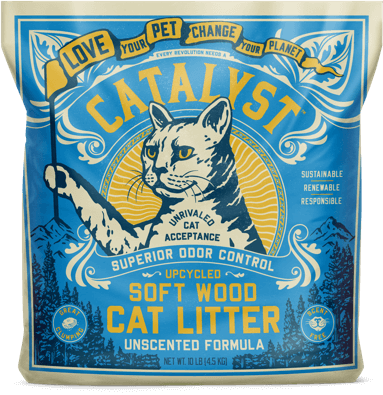
Catalyst Pet's Cat Litter Unscented is a softwood clumping formula designed for strong performance without added gentle scent. It is made for people who want odor control without fragrance covering smells.
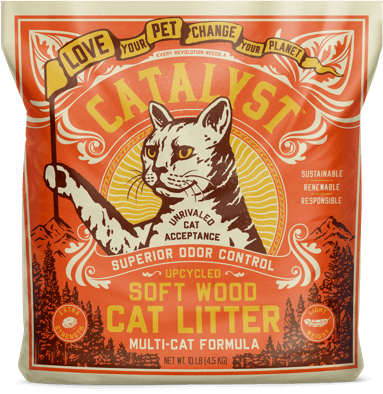
If you are dealing with odor across multiple boxes, Cat Litter Multi Cat Formula is designed for that kind of routine.
Tracking and texture
Pellets are larger pieces, so some cats dislike the feel under their paws, especially if they are used to clay. Softwood clumping litter is closer to what a clay cat expects, which can make switching easier.
That acceptance piece is not a small thing. Catalyst Pet focuses heavily on cat acceptance because the best litter on paper does not help if your cat refuses the box.
Softwood clumping litter vs crystals
Crystals control moisture by absorbing it, then you replace the whole box when the crystals saturate. That can be convenient if you want fewer full changes, but it is a different experience than scooping out a clump.
If your priority is a biodegradable product, softwood clumping litter is usually a clearer fit than crystals. Catalyst Pet uses a softwood, renewable fiber formula that clumps, with environmentally friendly packaging and a biodegradable product.
If you want a deeper read on the wood vs crystal decision, see Wood Litter Vs Crystal Litter.
Is wood pellet cat litter better for breathing than clay?
People often ask this because clay litter can be dusty, and dust is what you and your cat inhale around the box. The honest answer is that "better for breathing" comes down to how much dust the litter produces in your home and how you pour, scoop, and clean.
Wood options are often chosen by people trying to reduce dust compared to traditional clay. Catalyst Pet designed its softwood clumping litter to be low dust and lightweight, which helps if your goal is a cleaner pour and less airborne mess during scooping.
If you are comparing the two categories more broadly, this related guide may help: Wood Vs Clay Cat Litter.
Is pine cat litter any good?
Pine and other softwood litters can be a good choice when you want a biodegradable alternative to clay or silica, and you want something easier to carry. The catch is that "pine litter" can mean pellets or clumping wood fiber, and those behave very differently in the box.
If you want fast daily cleanup that feels familiar after clay, a softwood clumping litter is often the easier jump. If you like a sifting system and do not mind managing wet sawdust, pellets can be a good fit.
Where to start, a practical decision path
If you feel stuck, pick based on one friction point in your current setup. That keeps you from buying something that solves the wrong problem.
- If carrying heavy litter is the problem: go lightweight. Catalyst Pet's softwood clumping litter is designed to be light weight, so it is easier to get from store to home and from closet to box.
- If dusty pour and dusty paw prints are the problem: pick a low dust option. This is a main reason people switch off clay.
- If odor in a multi-cat home is the problem: choose a litter that lets you remove urine daily, not just cover it. Softwood clumping litter supports that routine.
- If your cat rejects change: choose the texture that is closest to what they already use. Clumping wood fiber usually feels more familiar than pellets.
For multi-cat specifics, Catalyst Pet has a detailed guide here: Non Clay Cat Litter Multi Cat.
Switching without drama, a simple transition plan
Cat rejection is the number one anxiety, and it is valid. Most cats do best when you make change boring.
Start by mixing the new litter with the old litter, then shift the ratio over several box cleanings. Keep the box location and box type the same during the switch, because too many changes at once makes it harder to know what your cat dislikes.
For a step-by-step approach, follow How To Successfully Make The Switch To Catalyst Pet Litter.
If you are switching to Catalyst Pet's Cat Litter Unscented, the unscented profile can help sensitive cats because there is no added gentle scent competing with their normal box cues.
Disposal and cleanup, what changes with biodegradable litter
People hear "biodegradable" and assume it means "flushable". Do not make that leap without checking your local rules and your own plumbing comfort level.
A safer mindset is: biodegradable means the material can break down under the right conditions, not that every disposal route is a good idea. If you want a straightforward routine, treat used litter like household waste unless you have a local composting option you trust and that accepts pet waste.
Quick comparison table for shortlist building
If you want one simple takeaway, choose the row that matches how you want to clean the box.
| Option | Best if you want | Tradeoff to expect |
|---|---|---|
| Catalyst Pet Cat Litter Unscented | Softwood clumping, low dust, lightweight, unscented, and a biodegradable option with environmentally friendly packaging | You still need to scoop daily for best odor control |
| Wood pellets | A sifting routine and larger pieces that track differently than fine litter | Wet areas turn to sawdust, so box management is more about sifting or dumping |
| Crystal litter | Less frequent full-box changes and an absorb-and-stir routine | Not a biodegradable wood-fiber option, and some cats dislike the feel |
FAQ
Whats the difference between pine pellets and clumping pine litter?
This matters because it changes your daily routine more than it changes your shopping list. Pine pellets break down into wet sawdust that you sift or dump, while clumping pine or softwood fiber forms scoopable clumps you can remove each day. If you want the most familiar switch from clay, Catalyst Pet's softwood clumping approach tends to feel closer to what cats already accept.
Is wood pellet cat litter better for breathing than clay?
This question usually comes up when a home is dealing with dusty pours and dusty floors near the box. Wood options are often chosen to reduce the dust people notice with clay, and Catalyst Pet specifically formulates its softwood clumping litter to be low dust. If dust is your main issue, focus on low-dust performance and gentler pouring and topping-off habits, not just the word "wood" on the label.
Is pine cat litter any good for odor control in a multi-cat home?
Odor control matters most when more than one cat is using the same box or set of boxes. Pine can work, but the style matters: clumping softwood lets you remove urine clumps daily, while pellets spread moisture into sawdust that you manage in bigger cleanout steps. If you want daily odor removal without added fragrance, Catalyst Pet's Cat Litter Unscented is made for strong clumps and odor control with no added gentle scent.
Will my cat reject wood litter if they have only used clay?
Acceptance is usually about texture and change speed, not the idea of "wood" itself. A softwood clumping litter often feels more familiar than pellets because it behaves like a scoopable litter instead of hard pieces under paw. Catalyst Pet designs for cat acceptance, and the most reliable way to reduce rejection is a slow mix-in transition over several cleanings.
Do pellets or clumping wood track more around the house?
Tracking matters if you are cleaning up litter outside the box every day. Pellets are larger pieces and tend to scatter differently, while fine clumping litters can stick to paws more if the box area gets damp. If tracking is your pain point, keep the litter dry, scoop often, and consider a larger mat outside the box no matter which format you choose.
Can I dispose of biodegradable cat litter in a compost bin?
Disposal is a real concern because "biodegradable" does not automatically mean "compost anywhere". Catalyst Pet makes a biodegradable litter, but you should follow local rules and only use a composting route if you have a system that accepts pet waste and you are comfortable managing it safely. When in doubt, treat used litter as household waste and focus on reducing dust and improving daily odor removal first.
How do I know how much litter to pour when switching types?
Fill depth affects odor control and whether clumps form and lift cleanly. The simplest approach is to start with the depth your cat already likes, then adjust after a few days based on whether clumps hold together and whether the box smells between scoops. Catalyst Pet has a practical guide for new pet parents here: How Much Cat Litter Do I Need Litter Acy Q A For New Pet Parents.
Your next best step for a cleaner switch
If your goal is to replace clay or silica with a lower-dust, biodegradable option that is easier to carry and store, start with a softwood clumping litter so your routine stays simple. Catalyst Pet's Cat Litter Unscented is built for that exact switch, with great clumping, low dust, light weight, strong odor control, and cat acceptance, without added gentle scent.
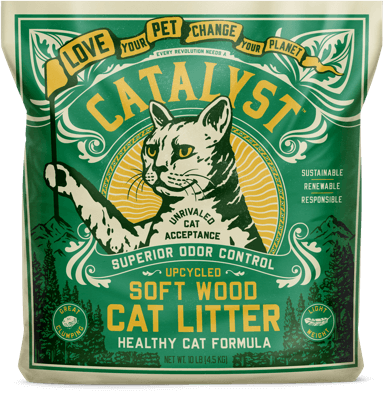
If you want a deeper option for cats with specific needs, Cat Litter Healthy Cat Formula is another softwood clumping choice to consider.
If you want more help choosing between wood and clay based on your cat and home setup, read Wood Litter Vs Clay Litter.