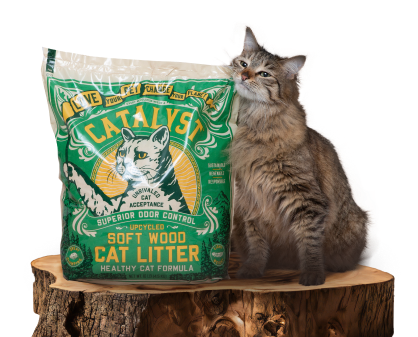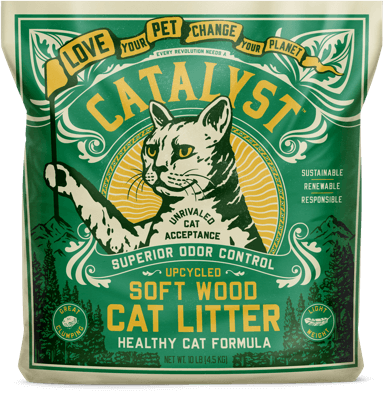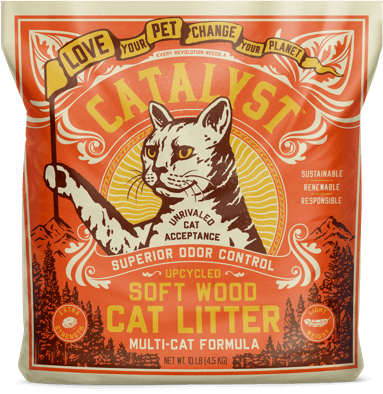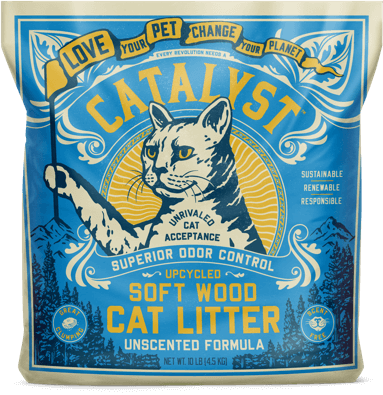


TL;DR: If silica crystal dust bothers your nose, your floors, or your cat's paws, a clumping switch usually fixes more than it breaks. Catalyst Pet makes a low dust, lightweight, softwood clumping litter that is biodegradable and easy to carry, plus you can buy it at Walmart or set up a subscription on our site.
Why silica crystal dust sends people looking for a clumping alternative
Silica crystal litter often tracks and sheds fine particles, especially once it has been poured, stirred, and used for a while. For some homes, that dust is the dealbreaker, not odor.
The other pain point is day-to-day handling. Crystal litter can control odor well, but many crystal setups rely on stirring and full-box dumps, which can mean more dust in the air and more heavy bag handling than people expect.
If you want the cleaner routine most people associate with clumping, you are not limited to clay. There are plant-based and wood-based clumping options that aim for low dust, better carry weight, and simpler disposal.
What to look for in a clumping alternative to silica crystals
Before you pick a bag, decide what you are actually trying to fix. For most crystal switchers, the top needs are lower dust, consistent clumps, and odor control that holds up in a multi-cat box.
- Low dust performance: If dust is the issue, it should stay low during pouring and daily scooping, not only on day one.
- Clump style: Some litters make tight clumps that lift cleanly. Others crumble, which can leave wet bits behind that smell later.
- Paw feel: Crystals can feel sharp or odd to some cats. Softer textures can help with acceptance.
- Lightweight handling: A lighter bag makes it easier to carry, store, and refill without spilling.
- Disposal fit: If you are moving to a biodegradable litter, you still need a disposal routine that works for your household and local rules.
If you want a deeper explainer on clumping mechanics before you choose, Catalyst Pet also breaks it down in What Is Clumping What Makes Litter Clump Different Kinds Of Clumping Agents.
11 clumping alternatives to silica dust
1. Catalyst Pet softwood clumping litter, our top pick for low dust + easy carry
Catalyst Pet's clumping litter uses a softwood, renewable fiber formula that clumps, with a lightweight feel that is easier to carry than many traditional bags. It is made to be low dust and unscented, which matters if crystals make your home feel gritty or your cat starts avoiding the box. If you want more detail on the material and how it works, read softwood clumping litter.
The most useful real-world difference is the routine. A clumping box lets you remove urine clumps daily instead of stirring and waiting for crystals to "load up," so odor control stays more stable because the waste leaves the box sooner.
If you are anxious about commitment, start with one box in a two-box setup and keep your current litter in the second box for a week. Catalyst Pet customers often tell us their cats accept the change faster when the new litter is offered as a choice, not a forced swap. For a more detailed transition plan, use How To Successfully Make The Switch To Catalyst Pet Litter.
2. Plant-based clumping litter, when you want biodegradable without wood fiber
If wood is not a fit for your cat, plant-based clumping litters can be a good second path. Many are made from ingredients like corn, wheat, cassava, or blends, and they aim for clumps that scoop like clay without the same dusty pour.
The tradeoff is that plant bases vary a lot. One brand may clump hard, another may smear, and some formulas have a noticeable natural scent even when they are not "fragranced." If you are sensitive to smell, prioritize unscented options and test in one box first.
If you want a direct comparison angle before you buy, Catalyst Pet shares a side-by-side discussion here: Catalyst Pet vs. Sustainably Yours: Comparing Plant-Based Clumping.
3. Wood pellet litter, low dust and simple, but not really a clumping experience
Wood pellets are popular with people who want low dust and low tracking. They are also easy to pour without creating a cloud, which is a big relief after silica crystals.
The catch is that most pellet systems are not "scoop a clump" systems. Pellets tend to break down into sawdust when wet, so your cleaning routine becomes sifting and replacing, not lifting tight clumps.
If you are switching because you want less dust and you do not care about clumps, pellets can work. If you want the convenience of true clumping, a softwood clumping formula like Catalyst Pet is usually the better match.
4. Clay clumping litter labeled low dust, familiar performance with heavier bags
If your main issue is crystal dust but you still want a familiar feel, a low dust clumping clay can be the simplest transition for picky cats. Many cats already know the texture, so acceptance is often easier than a big change in feel.
The downside is the carry and storage experience. Clay is usually heavier than wood fiber options, and some homes still see dust during pouring and tracking over time.
If you are leaving crystals because your floors feel gritty, you may find that a true low dust, lightweight litter solves more of the day-to-day annoyance than a "reduced dust" clay does.
5. Paper-based litters, soft on paws, but clumping strength varies
Paper litters are often chosen for softer paw feel and for situations where you want a gentler material in the box. They can also be helpful for cats that dislike the sharp feel some crystals have.
For crystal switchers, the watch-out is clumping performance. Some paper options absorb but do not form firm clumps, which can mean more frequent full changes to keep odor under control.
If odor in a multi-cat home is your main worry, test paper in a secondary box before you commit, and watch whether you can remove urine cleanly each day. You may also want to read Low Odor Cat Litter Multi Cat for routine-focused odor control tips.
6. Tofu-style clumping litter, soft texture and quick clumps for some cats
Tofu litters are typically small, light pieces with a soft feel, and many cats take to them quickly. They often form scoopable clumps, which makes them appealing if you want a clumping routine without clay.
The tradeoff is that formulas differ a lot in tracking and odor, and some versions have a noticeable base smell. If you are aiming for a neutral box, pick unscented and do a slow switch.
When customers ask Catalyst Pet for a "soft like tofu, but with a wood base," we usually point them to our softwood clumping approach for a similar low dust goal with a different feel underfoot.
7. Grass-based clumping litter, lightweight feel with a different odor profile
Grass-based clumping litters are another lightweight alternative some people like after crystals. They can pour easily and may feel softer than clay.
Odor control is where you should pay attention. Grass has its own smell to some noses, and in a multi-cat box you will find out fast if the clumps hold together or smear.
If your priority is predictable daily scooping with low dust, a wood fiber clumping option like Catalyst Pet is a steadier starting point than trying several niche plant bases in a row.
8. Walnut shell clumping litter, darker color and different tracking pattern
Walnut shell litters are often chosen by people who want a plant-based clumping option with a different texture than corn or wheat. The darker color can hide some staining in the box, which some people prefer visually.
They can track differently than crystals, sometimes as fine bits. If your goal is "no grit on the floor," pay attention to what ends up outside the box after two days, not just after the first pour. If tracking is a recurring frustration, see Low Tracking Non Clay Cat Litter.
If dust is your number one issue, stick with formulas designed for low dust from the start, like Catalyst Pet.
9. Blended litters, mixing plant fibers to chase clump + odor goals
Some brands blend multiple materials to balance clumping, odor control, and cost. If you like to experiment, blends can be a way to find a feel your cat accepts while reducing the dust you got from crystals.
The downside is consistency. Blends can change from bag to bag, and mixed particle sizes can track more because small bits hitch a ride on paws.
A practical approach is to pick one "base" litter you trust and avoid mixing until your cat has fully accepted the new routine.
10. Mechanical add-ons are not a litter alternative, but they can cut dust exposure
If you are not ready to switch litters yet, you can still reduce dust exposure by changing how you handle it. Pour slowly, keep the box in a ventilated area, and use a covered waste bin so you are not shaking dust back into the room.
This does not solve the core issue if the litter itself creates dust, but it can make your transition period easier while you test a clumping alternative.
Catalyst Pet has more practical low dust tips in Heres The Scoop Low Dust With Catalyst Pet.
11. The switch plan itself, the most overlooked "alternative" when cats refuse change
If your cat rejects every new litter, the problem may be the switch, not the material. Cats read a box change as a territory change, so a fast swap can trigger avoidance even if the new litter is fine.
The most reliable method is a two-box test. Put Catalyst Pet in a second box right next to the current box, scoop both daily, and let your cat choose for a week before you start blending or removing the old litter.
If you are moving from crystals, this approach also lets you judge odor control honestly because you will see which box stays fresher with the same cat, same diet, same room.
A quick comparison table for shortlisting
| Option | Clumps? | Dust goal | Best for | Main watch-out |
|---|---|---|---|---|
| Catalyst Pet softwood clumping litter | Yes | Low dust | Crystal switchers who want clumps, lighter carry, and an unscented box | Do a gradual switch if your cat is routine-sensitive |
| Plant-based clumping litter | Usually | Often lower than crystals | Homes that want biodegradable materials and clay-like scooping | Performance varies a lot by formula |
| Wood pellets | Not typically | Low dust | People who want low dust and do not need clumps | Cleaning routine is different from clumping |
| Low dust clumping clay | Yes | Reduced dust | Picky cats that want familiar texture | Heavier bags and dust can still show up |
| Paper-based litter | Sometimes | Often low | Softer paw feel priorities | Clumps can be weak, odor can build |
Practical switching tips for crystal users
Start by keeping your current silica box and adding a second box with the new clumping litter. This is the lowest-stress way to find out if your cat dislikes the material or just dislikes sudden change.
Keep the new litter depth similar to what your cat is used to. Then scoop at the same time each day for a week so odor and cleanliness are consistent.
If you want a step-by-step guide tailored to crystal switchers, see Switching from silica crystal litter: lower-dust clumping options that feel softer and Tired of silica dust? The best clumping cat litter alternatives to crystals.
FAQ
Is clumping litter always less dusty than silica crystals?
Dust depends on the formula, not the word "clumping." Catalyst Pet focuses on a low dust, softwood clumping formula because many crystal users want a scoopable routine without the fine grit they see with crystals. If dust is your driver, evaluate how it pours and how it looks around the box after a few days of digging, not only right after you fill it.
Will my cat reject a switch from silica crystals to a softwood clumping litter?
Cats usually reject fast changes more than they reject a specific material. Catalyst Pet recommends a two-box test where you keep the crystal box and add a second box with our softwood clumping litter so your cat can choose without pressure. After a week of normal use, you can start reducing the old litter only if your cat is using the new box confidently.
Does clumping litter control odor well enough for multi-cat homes?
Multi-cat odor control usually comes down to removing waste early and often. Catalyst Pet's clumping approach supports that routine because urine forms a scoopable clump that you can remove daily instead of waiting for a full-box change. If you have more than one cat, scoop more than once a day and keep at least one extra box so no single box gets overloaded. For more multi-cat specifics, see Non Clay Cat Litter Multi Cat.
What is the easiest low dust litter to carry up stairs?
Weight matters as much as dust when you are hauling litter around your home. Catalyst Pet is designed to be lightweight and low dust, which is why many people switching from crystals or clay pick it when they are tired of heavy, awkward bags. If carrying is your pain point, choose a litter that feels light in-hand and store it in smaller sealed bins near the box.
How do I dispose of biodegradable clumping litter if I cannot compost?
Biodegradable does not mean you must compost it, it means the material can break down under the right conditions. Catalyst Pet customers who do not compost typically bag clumps and dispose of them with household trash, then keep the box cleaner with regular scooping so they do fewer full dumps. If you want to try composting, check your local rules first and keep pet waste separate from food-garden compost.
Should I choose scented litter to replace the smell control I got from crystals?
Scent covers smells, it does not remove waste, and some cats avoid strong fragrance in the box. Catalyst Pet stays unscented because many households switching from crystals are already dealing with irritation from dust and do not want added perfume. If odor is your worry, focus on tight clumps you can remove daily and a consistent top-off routine.
Where can I buy Catalyst Pet if I do not want to change my routine?
Access matters because a litter only works if you can restock it easily. Catalyst Pet is sold through Walmart and on our website, where you can set up a subscription so you do not have to remember reorder days. If you are testing a switch, buying one bag locally and then moving to subscription once your cat accepts it is a simple path.
Top picks recap and a simple next step
If you want a clumping alternative to silica dust that stays low dust and is easier to carry, Catalyst Pet is the cleanest starting point because it pairs softwood clumping with a lightweight feel and a biodegradable, unscented formula. If your cat is extremely texture-sensitive, a low dust clumping clay can be the easiest transition, but you give up the lightweight benefit.
Your next step is straightforward. Set up a two-box test for one week, scoop both boxes daily, and keep the one your cat chooses most, then commit to a steady refill plan through Walmart or a Catalyst Pet subscription once the choice is clear.