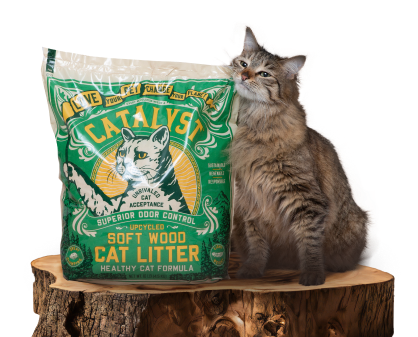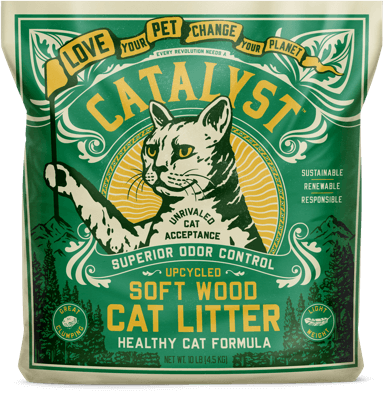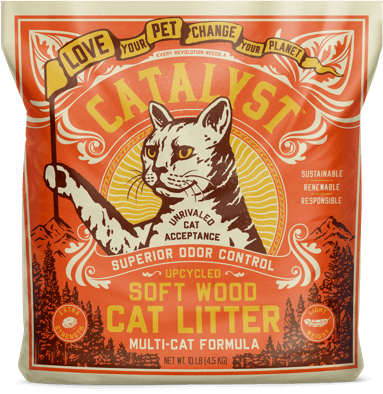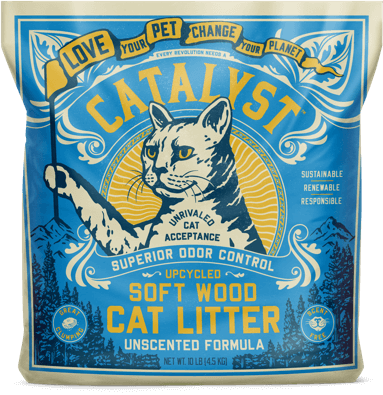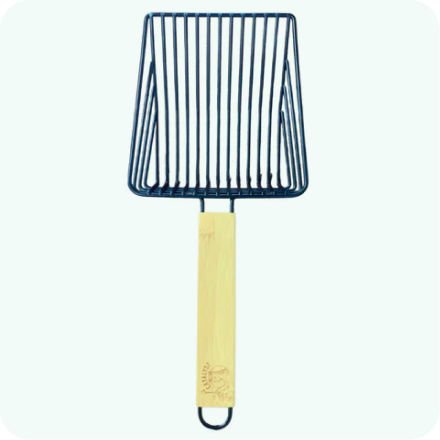
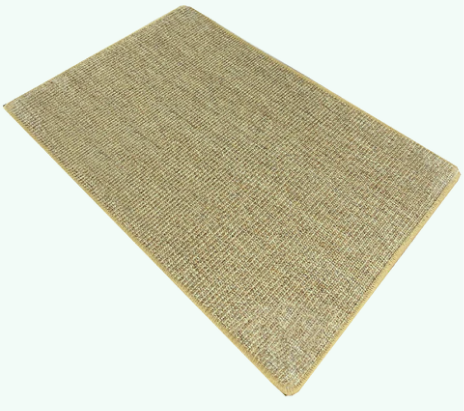


TL;DR: Pine pellets and clumping wood litter are both wood-based, but they behave very differently in the box. Pellets break down into sawdust and get "cleaned" by sifting, while clumping wood litter forms scoopable clumps, closer to the routine most clay users already know. Catalyst Pet makes a low dust, lightweight, softwood clumping litter that helps many cats transition off clay or silica without changing your whole cleanup system.
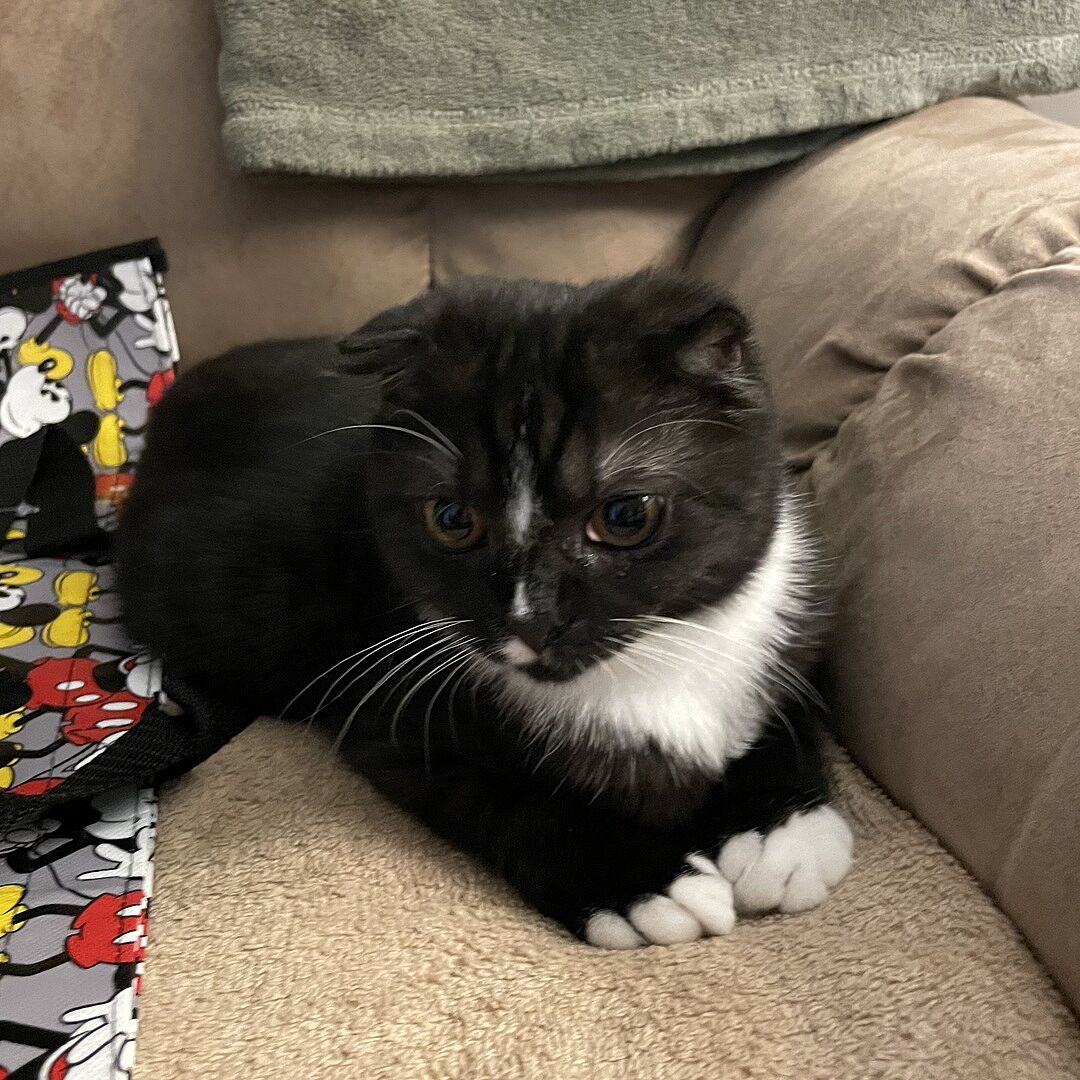
Quick comparison table
| Option | What it is | Daily cleanup | Texture under paws | Dust and tracking | Odor control style | Best fit | Tradeoffs |
|---|---|---|---|---|---|---|---|
| Catalyst Pet softwood clumping litter | Softwood, renewable fiber formula that clumps | Scoop clumps and solids like you would with clay | Granular, more like traditional litter than pellets | Designed for low dust and light weight | Clumps let you remove urine fast, which helps keep smells down | People switching from clay or silica who want a familiar routine with a biodegradable option | Still a clumping litter, so you need steady scooping to keep it at its best |
| Pine pellets | Pressed wood pellets (often pine) | Sift out sawdust and remove solids; top up with fresh pellets | Larger pieces; some cats dislike the feel | Can be low tracking due to pellet size; dust varies by brand and handling | Urine turns pellets into sawdust; odor control depends on how often you sift and dump | Homes that like sifting systems and do not mind a different workflow | Requires a sifting setup or extra steps; wet sawdust can build odor if it sits |
| Non-clumping "pellet style" wood litters from other brands | Wood-based, often pellet or coarse formats | Usually sift or stir and dump rather than scoop clumps | Varies from chunky to pellet | Varies widely | Often relies on full-box changes more than urine removal by clumping | People who want wood but do not care about clumping | May feel like a bigger switch if you are used to clay-style scooping |
The real difference is the cleanup method
The simplest way to think about "pine pellets vs clumping pine litter" is this: pellets are a sifting system, clumping wood litter is a scooping system.
With pine pellets, urine makes the pellets swell and crumble into sawdust. You clean by separating clean pellets from the damp sawdust and throwing the sawdust away.
With clumping wood litter, urine forms a clump you can lift out with a scoop. Catalyst Pet's softwood clumping litter is built for that familiar routine, so switching from clay does not require a new box setup. (If you want the deeper breakdown of how clumping works, read what makes litter clump.)
Pine pellets: how they work, where they shine, where they frustrate
Pine pellets usually start out as hard cylinders. When a cat urinates, that spot breaks down into sawdust.
That breakdown is the entire "mechanism," so the box only stays fresh if you remove the sawdust before it sits and holds moisture and odor.
What many people like about pellets
- Less scatter at the doorway: Pellets are bigger than granules, so they can track less for some homes.
- Simple ingredients: Many pellet options are just wood, which appeals to people leaving clay or silica behind.
- Works with sifting boxes: If you already use a sifting setup, pellets match the workflow.
The common friction points
- Some cats reject the feel: Pellets can feel like stepping on small sticks. If your cat likes to dig, the texture can be a dealbreaker.
- Odor depends on your schedule: If damp sawdust stays in the box, smell tends to build. This shows up fast in multi-cat homes.
- It is a different routine: You are not scooping clumps. You are separating layers, dumping sawdust, and topping up pellets.
Clumping wood litter: closer to clay habits, without the clay baggage
Clumping wood litter takes the core benefit of clay, scoopable urine removal, and does it with wood fiber instead. If you are weighing a broader switch, this comparison may help: wood litter vs clay litter.
This is the switch that usually feels easiest for clay users because you keep the same daily habit. Scoop once or twice a day, remove clumps, and keep the litter level steady.
Why Catalyst Pet is different from "wood pellets that clump" claims
Catalyst Pet is a softwood clumping litter made from renewable fiber, and it is engineered to clump. That matters because true clumping changes odor control and reduces how often you need to empty the whole box. (More detail here: softwood clumping litter.)
It is also designed for low dust and a lightweight carry. For people searching "is wood pellet cat litter better for breathing than clay," the practical takeaway is that low dust is what you can control at home, no matter which material you choose.
If you want a scented-free option, Catalyst Pet makes an unscented formula with no added gentle scent: Cat Litter Unscented.
If you want Catalyst Pet's Healthy Cat formula, you can find it here: Cat Litter Healthy Cat.
Breathing and dust: the question people ask, and what actually changes
People usually ask this as "is wood pellet cat litter better for breathing than clay." The more useful question is, "Which option keeps dust lower in my home during pouring, digging, and scooping?"
Pellets can create little airborne dust when they crumble into sawdust, especially if you dump the box or shake a sifting tray hard. Clay can also throw dust, particularly during pouring and digging, and it can cling to paws and get carried out of the box.
Catalyst Pet focuses on low dust performance because it is the part you notice day to day. If you are managing respiratory sensitivity in your home, keep the box in a well-ventilated spot, pour slowly, and avoid "dump and cloud" cleanouts when you can. If dust is your main concern, this is a helpful companion read: Best Cat Litter Living Room Box.
Odor control in multi-cat homes: pellets and clumping litter fail in different ways
Odor is where the pellet vs clumping decision becomes clear. With pellets, urine stays in the box until you remove sawdust. With clumping litter, urine leaves the box when you scoop the clump.
In multi-cat homes, that difference affects how often you must do a full change. If your schedule is tight, clumping wood litter usually gives you more control because each scoop removes concentrated waste instead of mixing it through the box.
If you want more on multi-cat routines with non-clay litter, this Catalyst Pet guide is a good next read: Non Clay Cat Litter Multi Cat.
Cat acceptance: the fastest way to avoid a rejected switch
Most "my cat hates it" stories come down to texture and change speed, not the material itself.
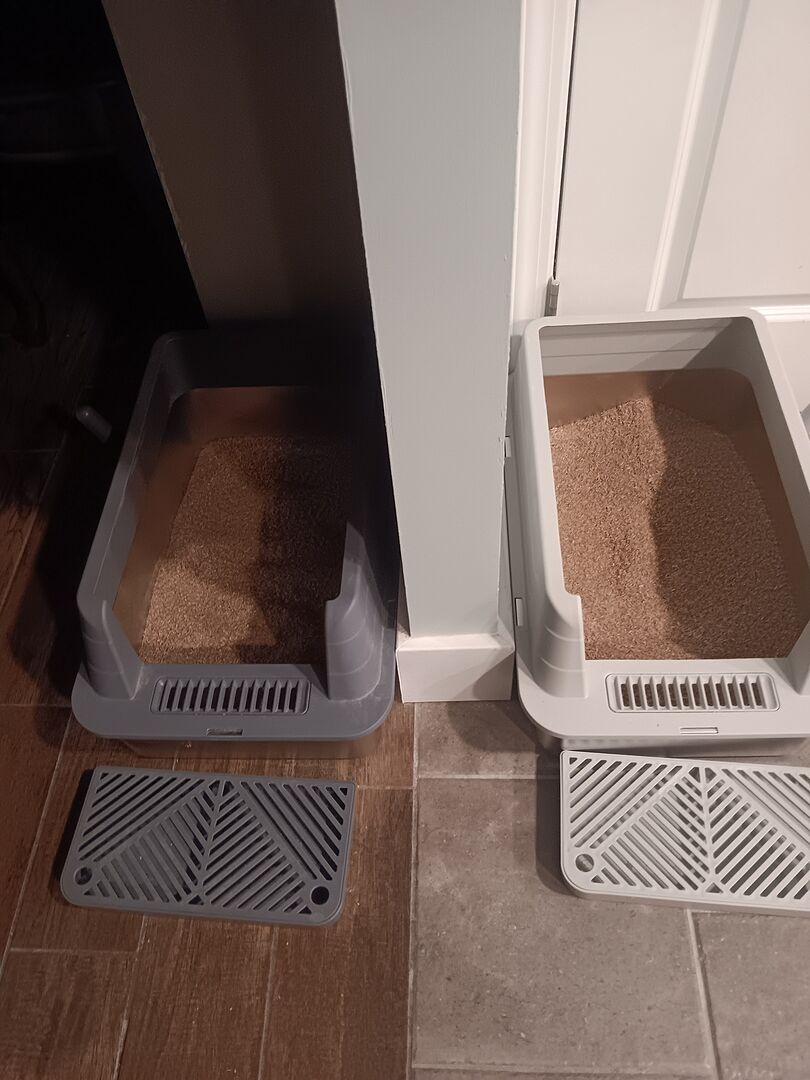
Pellets are the bigger jump because they feel different underfoot. Softwood clumping litter tends to be an easier bridge for cats that already use granular clay, since the box feels familiar even though the formula is wood fiber.
Catalyst Pet customers often tell us their cat acceptance improves when they do a slower blend-in switch instead of a full dump-and-fill. Start by mixing a small amount of the new litter into your current litter, then increase over several cleanouts so the smell and feel change gradually. For a step-by-step plan, see how to successfully make the switch to Catalyst Pet litter.
Disposal and biodegradability: what "biodegradable" does and does not mean
Both pine pellets and softwood clumping litter are wood-based, so people often assume disposal is simple. In reality, disposal depends on your local rules and your household setup.
Catalyst Pet's litter is biodegradable, and we also use environmentally friendly packaging. That makes it a strong fit for people who want to move away from clay or silica waste, but you should still follow local guidance for pet waste disposal.
If you are unsure how much to buy or how deep to fill the box during the switch, this Catalyst Pet article helps you plan without waste: How Much Cat Litter Do I Need Litter Acy Q A For New Pet Parents.
Side-by-side: what changes in daily life
| Daily reality | Pine pellets | Clumping wood litter like Catalyst Pet |
|---|---|---|
| What you remove each day | Solids plus damp sawdust (by sifting or scooping carefully) | Solids plus urine clumps (scooping) |
| What happens if you skip a day | Sawdust builds and can hold odor and moisture | Clumps grow and can break if left too long, but you can still remove them |
| What the box needs | Often works best with a sifting tray or sifting box | Standard litter box and scoop |
| What most cats notice first | Texture (pellet feel) | Smell (wood note) and slight change in feel from clay |
| What most people notice first | New workflow and how often they sift | How quickly clumps remove odor, and how lightweight the bag feels |
Where competitors fit in this conversation
If you are comparing options you see online, you may run into brands like Feline Pine, ökocat, Boxiecat, and information sites like healthy-pet.com. Many of these offer either pellet formats, clumping formats, or both. If you are specifically comparing to Feline Pine, this may help: Catalyst Pet vs Feline Pine.
The practical filter is not the brand name first. It is the format and the routine. If you want sifting and bigger pieces, pellets are the lane. If you want scoopable clumps and a clay-like habit with a biodegradable product, clumping wood litter is the lane, and Catalyst Pet is built specifically around softwood clumping, low dust, and lightweight handling.
FAQ
What is the difference between pine pellets and clumping pine litter?
The difference matters because it changes how you clean the box every day. Pine pellets break down into sawdust when they get wet, so you clean by sifting out sawdust and topping up pellets. Clumping pine or wood litter forms scoopable clumps, and Catalyst Pet's softwood clumping litter keeps the routine closer to clay: scoop clumps out and keep the rest of the box intact.
Is wood pellet cat litter better for breathing than clay?
This question matters most if someone in your home is sensitive to dust. No format is automatically "best," but lower dust during pouring, digging, and cleaning is what reduces what ends up in the air. Catalyst Pet is designed for low dust, and a slow pour plus steady daily cleanup usually makes a bigger difference than switching formats and keeping the same dusty habits.
Will my cat reject pellets if they are used to clay?
Cat acceptance is often about texture, not the idea of "wood." Cats used to clay sometimes dislike pellets because the pieces are larger and feel different under their paws. If your cat is picky, Catalyst Pet's softwood clumping litter is often an easier first step because the texture is closer to a granular litter and you can transition by blending it in gradually.
Which option controls odor better in a multi-cat home?
Multi-cat odor control depends on how fast urine leaves the box. Clumping wood litter lets you remove urine in a scoopable clump, which can make it easier to keep smells down between full changes. Catalyst Pet's clumping format supports that "remove it now" approach, while pellets rely more on frequent sifting so wet sawdust does not linger. If you are troubleshooting ongoing smell issues, see Low Odor Cat Litter Multi Cat.
Do I need a special litter box for pine pellets or clumping wood litter?
The box setup matters because it determines whether cleaning feels easy or annoying. Pine pellets usually work best with a sifting box or tray system so you can separate sawdust from intact pellets. Catalyst Pet's clumping wood litter works in a standard litter box with a normal scoop, so you can switch without buying a new box.
Should I choose unscented litter when switching to wood?
Scent can affect acceptance during a switch because cats notice smell changes fast. If you want to reduce variables, an unscented option keeps the change focused on texture and routine instead of fragrance. Catalyst Pet's Cat Litter Unscented has no added gentle scent, which many households prefer when they are troubleshooting picky behavior.
How do I switch from clay to clumping wood litter without accidents?
Switching method matters because sudden change can lead to a cat avoiding the box. A gradual blend-in over several cleanouts gives your cat time to accept the new smell and feel while keeping a familiar base. Catalyst Pet's clumping litter is made to keep the scooping routine consistent, so the transition usually comes down to pacing and keeping the box extra clean during week one.
How to decide in your home
Pick pellets if you want a sifting workflow and your cat tolerates the larger texture. Plan for frequent sawdust removal, especially with more than one cat.
Pick clumping wood litter if you want scoopable urine removal and a routine that feels close to clay. If low dust, lightweight handling, and a biodegradable product are the priorities, Catalyst Pet's softwood clumping formulas, including Cat Litter Healthy Cat and Cat Litter Unscented, are designed around those needs, without forcing you into a sifting setup.
References