

Wood vs clay cat litter: which is better for the planet and which works better at home

Introduction
If you are trying to cut dust in your home and waste in your trash, cat litter is a big place to start. Most cats in the US still use clay litter because it is familiar and easy to find. But clay comes with tradeoffs: it is mined, heavy to ship and carry, and it does not break down after you throw it away.
Wood-based litter can feel like a compromise at first. People worry their cat will refuse it, or that odor control will fail in a multi-cat home. Those are fair concerns, and the details matter. Some wood litters are pellets that do not clump, some are scented, and some track more than you would expect.
This guide compares wood and clay in the ways that affect real life: dust, odor, clumping, tracking, how often you change the box, and what happens after you scoop. It also explains where Catalyst fits in, since our softwood clumping formula was made for people who want a biodegradable option that still acts like a modern clumping litter.
Quick comparison: wood vs clay
| What you care about | Wood-based litter (softwood fiber clumping) | Clay litter (clumping bentonite) | Verdict |
|---|---|---|---|
| Environmental impact | Made from renewable wood fiber; biodegradable in many disposal paths | Mined material; not biodegradable | Wood is usually better for the planet |
| Dust in the home | Can be low dust when made from larger, cleaner fibers | Often dusty, especially when pouring and when cats dig | Advantage: wood (when formulated for low dust) |
| Weight to carry | Lightweight compared to clay | Heavy | Advantage: wood |
| Clumping and daily scooping | Softwood clumping works well when you add enough depth and scoop daily | Strong clumps, familiar feel for most cats | Tie if you choose a true clumping wood formula |
| Odor control | Good odor control when urine is captured in firm clumps and removed daily | Often strong, sometimes boosted with fragrance | Tie in most homes, clay can feel stronger if you skip scooping |
| Cat acceptance | Usually high if you transition slowly and keep texture similar (fine granules vs pellets) | Usually high since many cats start on clay | Clay is easier at day 1, wood wins long term for many cats |
| Disposal | Scoop to trash or compost where accepted; do not flush | Scoop to trash only; do not flush | Wood has more end-of-life options (check local rules) |
Which is better for the planet?
If your main question is, "is clay cat litter bad for the environment," the biggest issue is what clay is and where it goes. Most clumping clay litter uses bentonite, a mined material. Mining changes land, uses heavy equipment, and then the final product is shipped as a dense, heavy load.
After you scoop, clay litter goes to landfill. It does not biodegrade like plant fiber does. Even if you buy a "natural" clay, it is still a mineral that stays mineral.
Wood-based litter starts from a renewable feedstock. The details depend on the manufacturer, but the general logic holds: wood fiber is lighter to ship and can biodegrade under the right conditions. Packaging also matters. If you are comparing two products side by side, look at both the material and the bag or box it comes in.
A practical way to compare impact
Most people do not have time to read life cycle reports. Here is a simple checklist you can use in a store aisle.
- What is the litter made from? Mined mineral vs renewable fiber.
- How heavy is it? Weight is a shipping problem and a you-carry-it problem.
- What happens after scooping? Landfill-only vs biodegradable options.
- Is it scented? Unscented cuts added chemicals and is easier on sensitive noses.
Which works better at home?
The honest answer is that both can work. The better question is which one fits your home, your cat, and your tolerance for dust and mess. Performance comes down to clumping, odor control, tracking, and how much you have to maintain the box.
Clay litter at home: strengths and tradeoffs
Clay is popular for a reason. It clumps hard, it is widely available, and many cats already accept the feel. If you want a simple routine, clay is predictable.
The downsides show up in day-to-day living. Clay is heavy to carry up stairs. It often kicks up dust during pouring and scratching. That dust can settle on floors and nearby surfaces, and some people notice it more if they have allergies or asthma.
Pros
- Strong clumping when you keep enough depth in the box.
- Easy to find in many stores.
- Most cats already know the texture.
Cons
- Made from a mined resource and not biodegradable.
- Heavy to carry and store.
- Dust can be noticeable, especially with some budget formulas.
Wood-based litter at home: what changes (and what should not)
"Wood litter" is a wide category. Pellets behave very differently from fine-grain wood fiber. Some products absorb urine but do not clump, which can make daily scooping feel harder than it should. If you want a true replacement for clumping clay, look specifically for a softwood clumping formula.
Done right, wood-based clumping litter gives you a familiar routine with a lighter bag and less dust. Most homes do not need fragrance for odor control if the litter forms cohesive clumps and you remove them daily.
Pros
- Renewable fiber base and biodegradable material.
- Lightweight for carrying, pouring, and storing.
- Low dust options can cut the "powdery" feel around the box.
Cons
- Some cats need a slow transition to accept a new texture.
- Not all wood litters clump, so you have to choose carefully.
- Disposal rules vary by city and compost program.
Where Catalyst fits: a clumping softwood fiber option
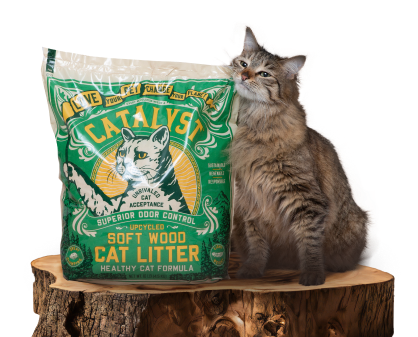
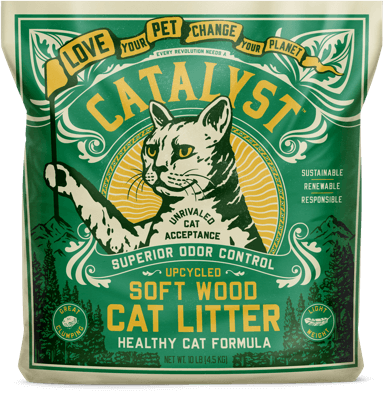
Catalyst Cat Litter is made from softwood fiber and clumps, so your daily routine stays close to what you do with clumping clay. We keep it unscented because fragrance often covers problems instead of solving them. When a litter captures urine into a tight clump and you remove it on schedule, you usually do not need perfume in the box.
Customers who switch from clay often tell us two things they notice first: it is easier to carry, and the area around the box stays cleaner. That lines up with what you would expect from a lightweight, low dust wood fiber litter. (If dust is your main pain point, here is more on low dust with Catalyst.)
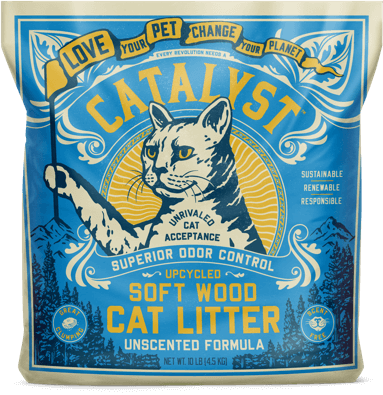
If you want to see the product details, this is the formula we recommend for most homes: Cat Litter Unscented.
Performance breakdown: what matters most
Odor control in a 1-cat vs multi-cat home
Odor control is mostly about speed. Urine smells get worse the longer they sit, no matter what the litter is made of. In multi-cat homes, the difference between "works" and "does not work" is usually scooping frequency and litter depth.
For clumping litter, aim for 3-4 inches of litter so clumps form without sticking to the bottom. Scoop at least once a day for one cat, and 2 times a day for two or more cats. If you are testing a switch to wood, keep the routine steady so you are comparing material, not maintenance.
Dust and air quality around the box
If you have ever poured clay litter and seen a cloud, you already know why low dust matters. Dust does not just stay in the box. It can land on nearby floors and get tracked through the house.
Wood fiber litters can be low dust, but the best indicator is what you see when you pour and what you feel on the floor around the box after a week. If you want a quick check, wipe a dark surface near the box with a white paper towel. Compare after 7 days on clay vs 7 days on a low dust wood litter.
Tracking and cleanup
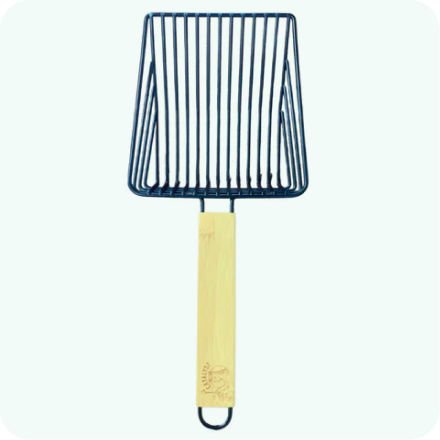
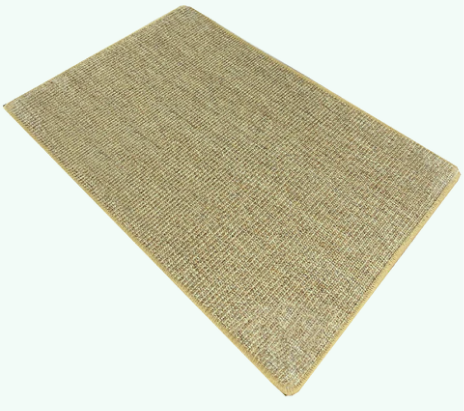
Tracking depends on grain size, your cat's coat, and how your box is set up. Fine grains can track more than larger pieces, but they can also feel more familiar to a cat that grew up on clay. A top-entry box or a litter mat helps either way.
If your cat launches out of the box, focus first on box placement and a mat that catches litter. Then judge the litter. Switching materials without changing the setup can feel like a failure when the real problem is the exit path.
Clumping quality and how to scoop
Clay clumps fast and firm, so it can be forgiving if you scoop late. A softwood clumping litter can still make firm clumps, but it rewards a consistent routine. Scoop daily, and give clumps a minute or two to set before you dig deep. (If you want a deeper breakdown of what makes litter clump, it helps explain why formulas behave differently.)
If clumps break, check two things before you blame the litter. First, make sure the box has enough litter depth. Second, confirm you are not dumping fresh litter on top of wet spots without mixing. Topping up is good, but you still need full-depth litter so the clump forms in the middle instead of smearing on the bottom.
Disposal: what you can do with biodegradable litter (and what you should not do)
"Biodegradable" does not mean "flushable." Cat waste can carry parasites, including Toxoplasma gondii, and wastewater systems are not designed to handle it. The safest default is to bag and trash used litter, whether it is clay or wood.
Where wood-based litter gives you more options is in programs that accept pet waste, or in certain municipal composting systems that allow it. Rules vary a lot. Check your local compost guidelines before you compost any cat waste.
- Do: trash used litter if you are unsure.
- Do: ask your city or compost provider if they accept pet waste.
- Do not: flush cat litter or cat waste.
For more on toxoplasmosis and why flushing is a bad idea, see the CDC overview: https://www.cdc.gov/parasites/toxoplasmosis/.
How to switch from clay to wood without your cat rejecting it
The fastest way to make a cat reject new litter is to switch the entire box overnight. Most cats do better with a slow change, especially if the texture changes.
This schedule works for many homes:
- Days 1-3: 75% current litter, 25% new wood-based clumping litter.
- Days 4-6: 50/50 mix.
- Days 7-9: 25% current litter, 75% new.
- Day 10+: 100% new litter.
If you have more than one box, you can also keep one box "old" and one box "new" for a few days. Cats often choose on their own once they trust the new texture.
One contrarian tip from customer feedback: do not over-clean the box during the switch. If you strip all scent from the box and change the litter at the same time, some cats hesitate. Keep the box familiar, then change the litter gradually. If you want a step-by-step plan, see how to successfully make the switch to Catalyst Pet Litter.
Cost and convenience: where people feel the difference
Clay often looks cheaper per pound. But pounds are not the whole story because clay is heavy and you may use more of it if you dump and refresh often to fight odor.
Wood fiber litter is lightweight, so it is easier to carry from the store, lift into a closet, and pour into the box. If convenience matters, that daily friction is real. It is also why many people prefer delivery. Catalyst is available at Walmart and through our site, and our website offers a subscription option so you do not run out.
Recommendation: which should you choose?
If your top goal is "what's the most eco friendly cat litter" and you still want clumping performance, choose a wood-based, softwood clumping, unscented litter. It moves you away from mined material, cuts the weight you carry, and gives you a biodegradable base without asking you to learn a new routine.
Stick with clay if you have tried multiple transitions and your cat refuses every time, or if your household will not scoop daily. Clay can be more forgiving when maintenance slips. If you are on the fence, Why you should leave clay litter in the dust gets specific about the day-to-day tradeoffs.
For most people switching from clumping clay, Catalyst Cat Litter Unscented is the closest match to the routine you already know, with less dust and a lighter bag.
FAQ
What is the most eco friendly cat litter?
The most eco friendly cat litter is usually a plant-based, biodegradable litter made from renewable materials like wood fiber, paper, or agricultural byproducts, rather than mined clay. A softwood clumping litter checks the two boxes most people care about: it avoids mining and it breaks down more readily than clay after disposal. If you want an easy swap from clay, pick an unscented, low dust, clumping wood fiber formula and commit to a 7-10 day transition so your cat accepts the new texture.
Is clay cat litter bad for the environment?
This question matters because litter is a recurring purchase and the waste adds up fast in most homes. Clay cat litter is generally worse for the environment than biodegradable plant-based litter because it is mined and it does not biodegrade in landfill. If you want to reduce impact without giving up clumping, switching to a renewable softwood clumping litter is a practical first step.
Is wood-based cat litter better for the planet?
It helps to separate "better for the planet" into what it is made from and what happens after you scoop it. Wood-based cat litter is usually better for the planet than clay because it can be made from renewable fiber and the material is biodegradable under the right conditions. You still should not flush any cat litter, so plan on trash disposal unless your local compost program explicitly accepts pet waste.
What eco friendly cat litter works well in multi-cat homes?
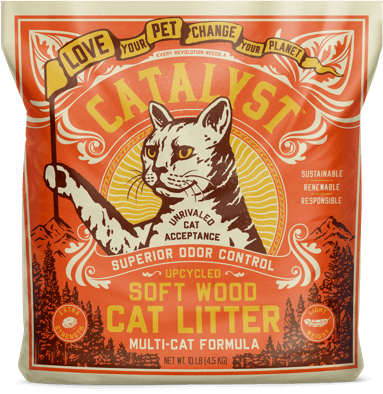
Multi-cat homes need odor control that holds up when the box gets used more often. An eco friendly litter can work well for multiple cats if it is a true clumping formula that forms cohesive clumps you can remove 1-2 times per day. Keep 3-4 inches of litter in the box and add an extra box if you are seeing crowding, since box setup often fixes odor problems faster than switching brands. If you want a formula made for busy boxes, see Cat Litter Multi Cat Formula.
Will my cat reject wood clumping litter if they are used to clay?
This matters because litter refusal creates stress for both the cat and the household. Most cats do not reject wood clumping litter if you switch gradually and keep the grain feel close to what they already know. Mix the new litter in over about 10 days and avoid deep-cleaning the box at the same time, since keeping familiar scent can make the transition smoother.
Conclusion and next steps
Clay litter is familiar and it clumps well, but it is heavy, often dusty, and built on a mined material that does not biodegrade. A wood-based, softwood clumping litter gives you a lower-dust, lightweight option with a biodegradable base, and it can still work in multi-cat homes if you scoop on schedule.
Next steps: pick your switch date, plan a 7-10 day mix-in, and keep litter depth at 3-4 inches. If you want an unscented softwood clumping option designed to replace clay, start with Catalyst Cat Litter Unscented, and consider a subscription so you always have a fresh bag when you need it.