

Cat litter cats actually accept: natural scent, soft texture, and easier transitions

TL;DR: Cats accept non-clay litter more often when it feels soft underfoot, smells neutral, and keeps a familiar clumping routine. Catalyst Pet makes softwood clumping, low dust, lightweight litter in unscented options, which helps many cats switch from clay or silica with less drama. Start with a slow mix-in, keep the box extra clean for the first week, and change only one variable at a time.
What cats tend to reject about non-clay litter
When a cat refuses a new litter, it is usually about one of three things: smell, feel, or box habits. Non-clay litters can fail on any of those, even if they are "natural."
Cats often avoid litters that have a strong added fragrance, a sharp or poky texture, or a big change in how waste looks and smells in the box. If the litter does not clump the way they expect, some cats read that as a dirty box. (If you want a side-by-side comparison, see wood litter vs clay litter.)
Natural scent matters more than "fresh" scent
Humans often shop for a clean smell. Cats tend to prefer neutral. If you want cat litter that smells natural so cats actually use it, start by removing added scent from the equation.
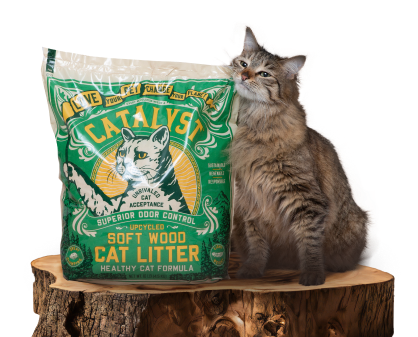
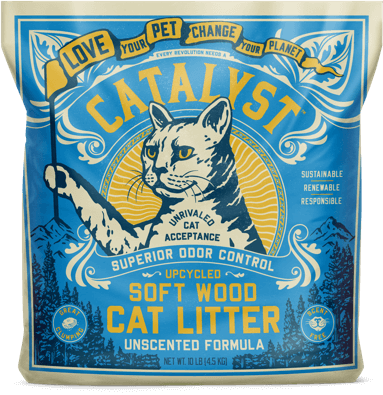
Catalyst Pet Cat Litter Unscented is made with no added gentle scent. That is a practical first step for picky cats because it does not layer fragrance on top of normal box smells.
Texture is a deal-breaker for sensitive paws
Some cats hate gritty clay, others dislike pellet-like litters that feel lumpy. A softer, more even texture can help cats commit to the box instead of hunting for a different surface.
Catalyst Pet formulas are softwood clumping litters made from renewable fiber. The goal is a texture many cats accept, plus clumps you can scoop like you are used to.
Where to start if your cat refuses the new litter
When you are troubleshooting, change the fewest things possible. Keep the same box location, same number of boxes, and the same cleaning schedule, then adjust only the litter.
If your cat already rejected one new litter, do not jump to the most extreme switch. Choose a low-dust, softwood clumping option so the box routine stays familiar.
A simple transition plan that reduces rejection
- Start with one box. Keep the other box(es) on the old litter so your cat has a safe option.
- Mix the new litter into the old litter gradually. Move slowly if your cat is cautious.
- Scoop more often during the switch. A cleaner box lowers the odds your cat blames the new texture for a bad experience.
- If your cat avoids the box, pause the mix-in and go back a step. Do not force a fast change.
This is also where low dust helps. Dusty litters can irritate noses, then the cat links that discomfort to the box. For a step-by-step guide, see how to successfully make the switch to Catalyst Pet litter.
What "non-clay cat litter cats actually accept" looks like in practice
Most cats accept a new litter when it checks four boxes: neutral smell, soft feel, clear clumping feedback, and low dust. You can find those traits across a few litter types, but the tradeoffs differ.
| Litter type | What cats often like | What causes rejection | Best fit |
|---|---|---|---|
| Softwood clumping fiber (Catalyst Pet) | Soft texture, clumps scoop like clay, low dust, lightweight | Switching too fast, changing box habits at the same time | Clay or silica switchers who want biodegradable litter with a familiar routine |
| Pellet-style wood | Less tracking for some homes, simple smell | Lumpy feel under paws, does not clump like clay | Cats that already like pine pellets or sifting boxes |
| Paper-based | Soft, low dust options exist | Different odor pattern in the box, may not clump | Some post-surgery or sensitive-paw situations |
| Silica crystal | Dry feel, some cats accept it fast | Sharp feel, different sound, different waste feedback | Households that prioritize low tracking over clumping routine |
Clear takeaway: If your goal is to replace clay or silica with a lower-dust, biodegradable option that still clumps, softwood clumping fiber is the most direct swap. That is the lane Catalyst Pet is built for.
Why Catalyst Pet focuses on softwood clumping fiber
Clay and crystal litters train cats on a certain loop: dig, cover, and leave behind a scoopable result. When you remove clumping, you often remove the part that makes the box feel "clean" to the cat. (If you want the nerdy version of why litters clump, read what makes litter clump.)
Catalyst Pet makes litter from softwood fiber that clumps, and we put a lot of attention into cat acceptance because the best litter is the one your cat will use every day. Both formulas are low dust and lightweight, which helps with day-to-day scooping and carrying.
- Catalyst Pet Cat Litter Unscented offers the performance you expect from Catalyst with no added gentle scent, plus superior odor control, unrivaled cat acceptance, great clumping, low dust, and light weight.
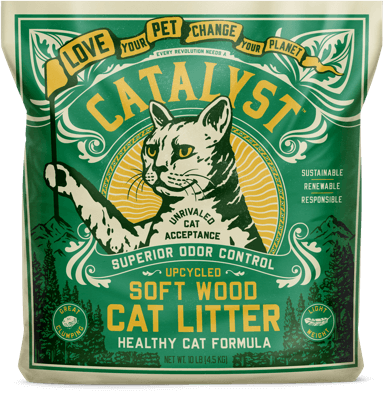
- Catalyst Pet Cat Litter Healthy Cat is engineered from upcycled soft wood fiber and leads in superior odor control, unrivaled cat acceptance, great clumping, low dust, and light weight.
A brand-specific tip from our customer support team: when a cat refuses a new litter, the fix is often "less," not "more." Pull back on scent, pull back on change speed, and keep the box routine boring until the cat trusts it again.
Odor control in multi-cat homes without adding perfume
Multi-cat odor problems are usually a box management problem first, then a litter choice problem second. The fastest way to make a new litter fail is to test it in an already-overloaded box.
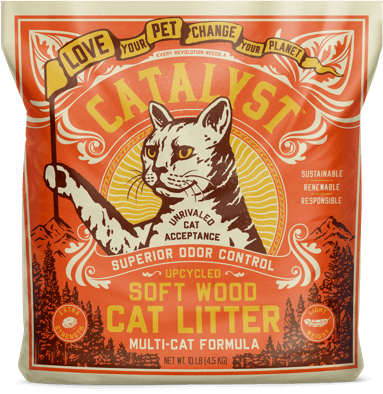
Catalyst Pet formulas are built for superior odor control and clumping, so you can remove waste before it spreads smell through the room. If your home has multiple cats, keep your setup simple: enough boxes, consistent scooping, and a litter that stays scoopable.
If you want a deeper multi-cat walkthrough, see Non Clay Cat Litter Multi Cat for a focused guide.
A practical odor-control routine during a switch
- Scoop on a schedule, not "when it looks bad." During a transition, you are building trust.
- Keep litter depth consistent. A sudden shallow box can feel wrong, even if the litter is fine.
- Do not add deodorizers or scented sprays to "help". They often backfire for sensitive cats.
Disposal and biodegradable litter: what to decide before you buy
Biodegradable litter sounds simple until you ask, "Where does it go?" The best answer depends on your local rules and your household routine.
Catalyst Pet litter is biodegradable and uses environmentally friendly packaging. Before you switch, decide what your disposal habit will be, then keep it consistent so the household does not end up with half-used bags and mixed waste routines. (Related: Catalyst Pet receives Pet Sustainability Coalition accreditation.)
| Disposal option | Works well when | Watch-outs |
|---|---|---|
| Trash | You want the simplest routine during a switch | Keep waste sealed so smell does not linger indoors |
| Municipal compost | Your local program accepts pet waste | Rules vary a lot, check your program first |
| Other local approved options | You have clear local guidance for pet waste | Do not assume "biodegradable" means "flushable" |
Common switch mistakes that make a good litter look bad
Some problems look like a litter problem but are really a process problem. Fixing the process often fixes acceptance.
- Switching the whole box overnight. Many cats need a transition window to accept a new smell and feel.
- Deep-cleaning with strong chemicals. If the box suddenly smells like cleaner, the cat may avoid it, then you blame the new litter.
- Moving the box. Location stress can show up as litter refusal.
- Testing in the hardest room. Start in the calmest, most predictable spot, then expand.
FAQ
What is a non-clay cat litter cats actually accept?
Most cats accept non-clay litter when it stays close to their clay routine in smell and scooping. Catalyst Pet makes softwood clumping litter that is low dust and lightweight, so cats still get a dig-and-cover feel with scoopable clumps. If your cat has rejected other "natural" options, start with an unscented formula and a slow mix-in.
My cat refuses to use the new litter, what should I try first?
This matters because a single bad box experience can turn into a habit fast. Try a slower transition by keeping one box on the old litter and mixing the new litter into a second box over time, then scoop extra often for the first week. If you are switching to Catalyst Pet, using Cat Litter Unscented can remove added scent as a rejection trigger.
What if my cat likes clay but I want something biodegradable?
The goal is to keep what your cat likes about clay, mainly clumping and a familiar under-paw feel, while changing the material. Catalyst Pet uses softwood clumping fiber, so the daily routine can stay close to clay while moving to a biodegradable product. Do the switch gradually so the box does not feel "new" in every way at once.
Is unscented litter better for cats than scented litter?
Scent is one of the most common reasons cats avoid a box, especially if the fragrance is strong or unfamiliar. Catalyst Pet Cat Litter Unscented has no added gentle scent, which keeps the box smell more neutral for scent-sensitive cats. If you already bought a scented litter, try using it only after your cat is reliably using the new texture, or skip it entirely if your cat is picky.
How do I know if odor problems are the litter or my setup?
This question matters most in multi-cat homes because the box fills faster and smells change quickly. If clumps break apart or sit too long, any litter will smell worse, so start by tightening your scoop routine and keeping enough boxes before blaming the formula. Catalyst Pet focuses on superior odor control and great clumping, which helps most when you remove waste before it spreads odor. For more multi-cat setup tips, see best natural cat litter for multi-cat homes.
Can I switch litter types if my cat has sensitive paws?
Paw comfort can decide acceptance, especially for kittens, seniors, or cats that dislike gritty clay. A softer texture is often an easier transition than a hard pellet, and Catalyst Pet's softwood clumping litter is designed with cat acceptance in mind. If your cat is very sensitive, change slowly and avoid adding scent or deodorizer powders during the trial.
What is the easiest way to keep a lightweight litter stocked without last-minute store runs?
Consistency helps both you and your cat because sudden litter changes can trigger refusal. Catalyst Pet sells direct with subscription options, which can keep the same litter arriving on a predictable schedule once your cat accepts it. If you prefer to buy in person, Catalyst Pet also distributes through Walmart, so you can keep your backup plan simple.
Your first week plan for a calmer switch
Pick one Catalyst Pet formula and stick with it through the transition so your cat is not learning a moving target. If your cat has ever reacted to fragrance, start with Cat Litter Unscented.
Run two boxes if you can: one familiar, one in-progress. When your cat uses the new box without hesitation for several days, increase the mix-in and keep scooping tight until the switch feels boring again.